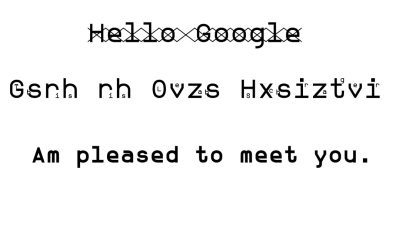
The Google Project (2010-2015) began after what I called an “internet accident.” In 2010, I unexpectedly became a viral public figure under the pseudonym Sarah White. As attention grew, I became increasingly concerned with anonymity, online identity, and the relationship between a person and their search results.
The project took the form of a long-term interaction with Google itself. Rather than treating search engines as neutral technologies, I approached them as spaces where identity could be constructed, manipulated, erased, multiplied, and performed. Over five years, the work evolved through three phases: Removal, Multiplication, and Conflation.
In Part I: Removal, I attempted to erase images of my face from Google search results while simultaneously reconstructing it through photography, video, and performance. The work explored anonymity, surveillance, facial recognition, and the role of women’s faces in digital culture.
The project changed direction in 2013 after an anonymous commenter publicly connected Sarah White to my real name. At the time I referred to this act as “revenge tagging,” a term I used to describe the deliberate linking of an anonymous identity to a public one. Today it might be understood as an early form of doxxing or deanonymization. The event effectively ended the first phase of the project and forced me to rethink anonymity itself.
In response, I began Part II: Multiplication. If I could not remove myself from search results, I would overwhelm them. Through a fictional artist collective and the deliberate circulation of contradictory information, I attempted to create multiple versions of “Leah Schrager” online. The goal shifted from subtraction to proliferation, making identity increasingly difficult to locate and define.
Part III: Conflation emerged when I stopped trying to escape or obscure my online identity and instead began using it as artistic material. During this phase, I publicly revealed myself as Sarah White while simultaneously developing multiple Ona personas and exploring artist branding, social media identity, and self-representation. I became fascinated by the way Google searches often produced composite identities—mixing together different people, images, aesthetics, and contexts into a single portrait assembled by the search engine itself. Rather than removing or multiplying identities, I began layering them together. Sarah White, Leah Schrager, and the various Onas became intertwined, creating a more complex and expansive identity than any one persona could contain.
Looking back, The Google Project was an early investigation into many of the questions that would later define my practice: anonymity and visibility, surveillance and self-branding, authorship and performance, and the increasingly unstable relationship between people and their digital representations.
If Removal attempted to hide identity, Multiplication attempted to confuse it, and Conflation attempted to embrace it as artistic material. Long before today’s influencers, online reputation management, and concerns about digital privacy became mainstream topics, the project treated identity itself as an artistic medium.
Part I: Removal = Hide the Identity, 2010–2012
In 2010 I experienced what I called an “internet accident” and began removing images of my face from the web. I contacted publications and blogs and successfully removed nearly every photograph of myself from Google Images. One image remained.
Inspired by contemporary facial reconstruction technologies, the predominance of women’s faces in media, and the internet’s ability to archive faces through Facebook and Google, I comment on having my face taken and my attempts to reconstruct it.
The works in this section document an attempt to reclaim anonymity while simultaneously acknowledging the impossibility of complete erasure.
This phase included Facetook, Facial Reconstruction, and Goodbye Video, concluding with my first public appearance after the reconstruction at with Chashama in 2012.
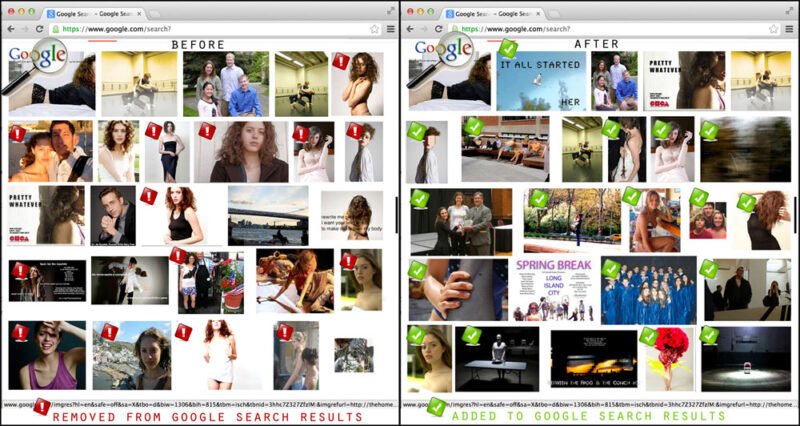
Google images
I was able to remove over twenty images showing my face from Google Image Search. There was one image I was unable to remove.
Facetook
A series of reconstructed portraits created in response to the removal of my image from the internet.
Goodbye Video
In Goodbye Video, I say goodbye to my parents and explain my reasons for reconstructing my face. After undergoing the reconstruction, I made my first public appearance at “Spring Break” through Chashama Gallery in New York City on March 24, 2012, where I crowned myself Prom Queen.
Below are facial reconstruction mockups and screencaps from documentary footage filmed by Louis Timmy.
Revenge Tagging / DirtyLove4812, 2013
The first phase of The Google Project ended when an anonymous YouTube user publicly linked Sarah White to my real identity.
At the time, public discussion focused on what was then called “GF Revenge” or revenge porn, in which intimate images of women were distributed online alongside identifying information. What happened to me was different, but related. I began referring to it as “Revenge Tagging”—the act of attaching a real identity to a previously anonymous online persona.
An anonymous commenter posted that Sarah White was Leah Schrager beneath two videos. This caused significant anxiety for me, as I was holding public performance art events from my home while simultaneously receiving hate mail and death threats directed at Sarah White. It effectively destroyed Part I of The Google Project.
I contacted the video owners and attempted to have the comments removed. One was removed; another remained. I tried reporting the comment to YouTube, but the comment was not removed. Despite my efforts to bury the connection, it eventually rose from page five of my Google search results to page one.
The incident demonstrated that online identity is never fully controlled by the individual. A single anonymous comment was capable of undoing years of work devoted to anonymity. It also convinced me that subtraction alone was insufficient.
The comment remained through 2014. In 2015, DirtyLove4812 disappeared.
Part II: Multiplication = Confuse the Identity, 2013–2014
After Revenge Tagging, I concluded that subtraction was insufficient. If I could not remove information about myself from the internet, I would create more of it.
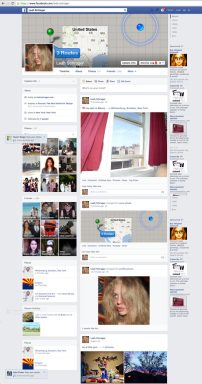
Part II focused on multiplication. Through a fictional artist collective found at ThisIsLeahSchrager.com, I created multiple versions of Leah Schrager online. The collective’s members, biographies, artist statements, and artworks were all fabrications designed to complicate attempts to determine who the “real” Leah Schrager might be. The project was propagated through my personal Facebook account and other online platforms.
The project explored how identity is constructed through search engines, websites, social media profiles, and self-branding. Rather than concealing identity, I attempted to overwhelm systems of identification with contradictory possibilities. If Removal sought anonymity, Multiplication sought ambiguity.
The collective functioned as a kind of Google flood. By introducing multiple identities, biographies, images, and artist statements into circulation, I attempted to make search results increasingly unstable. The goal was not simply to hide information, but to make certainty itself difficult.
The collective’s mission, On the Nature of Digital Art, was to investigate the flow from medium to image, image to website, website to social network, social network to search engine, and search engine back to the viewer. Through this process, the project explored online identity, surveillance, artistic representation, web marketing, and self-branding.
At the conclusion of the project, it was revealed that every member of the collective was a version of myself. The profile photograph of each artist was a digitally manipulated image of Leah Schrager, and the multimedia and multidimensional artworks attributed to different members were all created from photographs I had taken.
The Collective: ThisIsLeahSchrager.com was a collective of artists working under the name Leah Schrager formed in 2013. The website provided details on each member’s biography, artistic statement and art works.
The Collectives Mission: On The Nature of Digital Art. Interested in the flow of medium to image to website, to social networking, to search engine, to desktop, the collective’s mission is to investigate questions of online identity, internet surveillance, artistic representation, web marketing, and self branding.
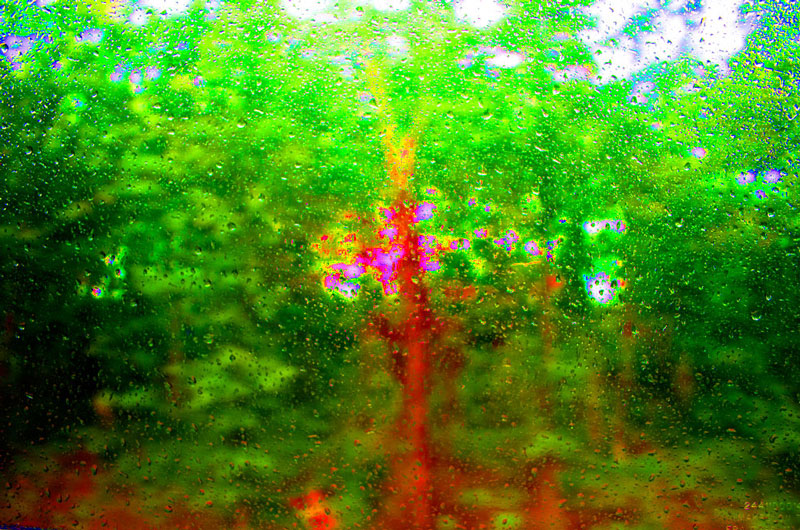



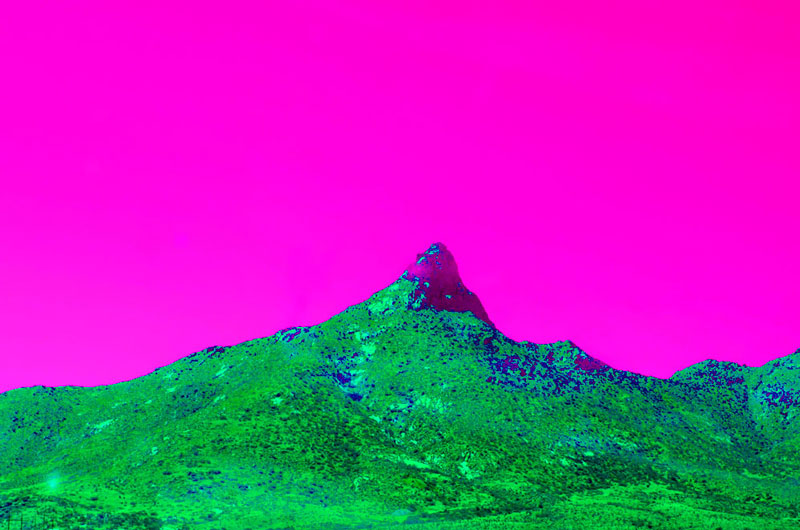
I propagated the collective through my personal facebook:
Part III: Conflation = Embrace the Identity as Material, 2014–2015
Part III emerged when I stopped trying to escape or obscure my online identity and instead began using it as artistic material.
During this phase, I publicly revealed myself as Sarah White while simultaneously developing multiple Ona personas and exploring artist branding, social media identity, and self-representation. Rather than asking how identity could be hidden or confused, I became interested in how it could be constructed, expanded, and performed.
I also became fascinated by the way Google searches often produced composite identities—mixing together different people, images, aesthetics, and contexts into a single portrait assembled by the search engine itself. A search result was rarely a coherent representation of a person. Instead, it functioned as a collage of identities, references, and projections.
Rather than removing or multiplying identities, I began layering them together. Sarah White, Leah Schrager, and the various Onas became intertwined, creating a more complex and expansive identity than any one persona could contain. The project shifted from anonymity toward visibility and from concealment toward self-branding.
This phase marked the transition between The Google Project and my later social media work. Many of the questions explored here—visibility, performance, identity construction, audience participation, and the relationship between a person and their digital image—would become central to the Ona project that followed.
The theoretical framework for this phase was developed through Ona Gen, an essay exploring the possibility that online identity had become generational, fragmented, distributed, and multiple rather than singular and fixed.