My work has developed through a series of overlapping phases, from dance and early self-portraiture to online performance and celebrity. Today, it has turned toward motherhood, AI, and the Sonoran Desert. This page follows that history through the projects, images, and questions that shaped each period.
Phase 1: pre-2010
origins
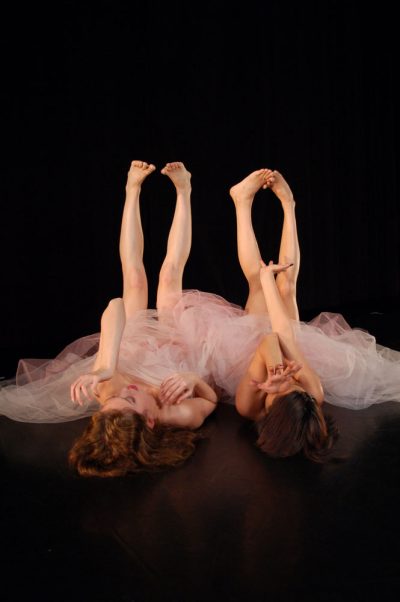
I began dancing at the age of five and trained in ballet until college, where I was introduced to modern dance, choreography, and performance. After graduating from the University of Washington, I moved to New York City in 2009 to pursue dance. Wanting greater authorship over my own work and drawn to the permanence of images, I picked up a camera and began photographing myself, friends, and the city. Combining photographs with text in works I called phoems, I became increasingly interested in the image itself. This marked the beginning of my visual art practice.

Phase 2: 2010-2015
Owning the Image
The Sarah White Years
I joined The Performance Club (run by Claudia LaRocco) in 2009 and was immersed in New York’s downtown performance and art world. Inspired by that community—and many other things (see my Animal New York interview for the full story)—I did something wild.
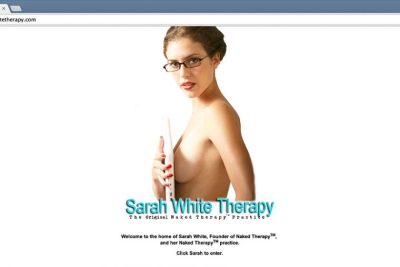
In 2010 I created Sarah White and began offering hour-long Naked Therapy sessions via webcam. The project went viral in 2011 and eventually appeared in thousands of news outlets worldwide, with one Viennese journal calling me “Freud’s naked granddaughter.”
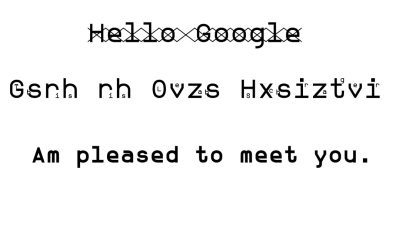
At the time, Sarah White had no connection to my own name, and I wanted to keep it that way. This led to The Google Project, where I explored anonymity, search engines, and identity by repeatedly—and unsuccessfully—trying to control my online presence. I attempted to remove all images of Leah Schrager from the internet, was eventually doxxed, then shifted toward strategies of multiplication and finally conflation. I came to see online identity as something authored not by a single person, but collectively by search engines, platforms, other people, and ourselves.
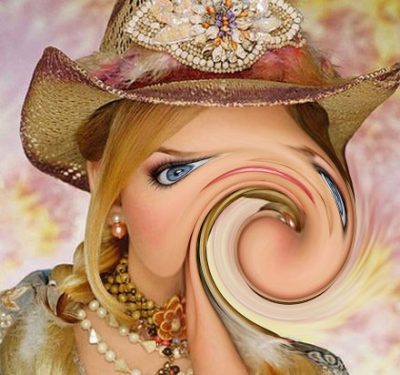
During this period I also began questioning the role of the female model within contemporary art. Working occasionally as a model, I wanted to make visual art from my own modeling photographs. When I asked photographers for co-copyright, I was consistently refused. In response, I created My Modeling Portfolio (2011), making derivative works from photographs of my own body in order to reclaim them as artistic material. This became one of the central questions of my practice: Can what a woman makes from her own image be valued as highly as what someone else makes of it?
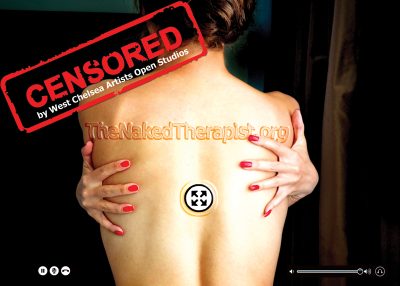
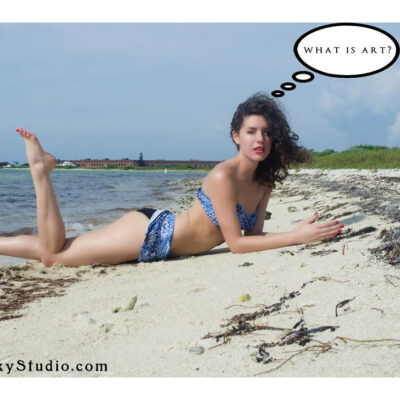
Soon afterward I was accepted into—and then removed from—the West Chelsea Artists Open Studios after my work was declared “an ad, not art.” That experience became Am I Not an Art/Ist? (2012), making visible how difficult it remained for the art world to recognize work that combined the female body, commerce, and self-production. The question persisted: Is it art or not?
I decided to pursue an MFA in Visual Art at Parsons to expand these investigations. There I publicly revealed myself as the Naked Therapist, created my first multimedia installations, continued developing my digital image practice, and gradually shifted from multiple online personas toward a single emerging identity: Ona.
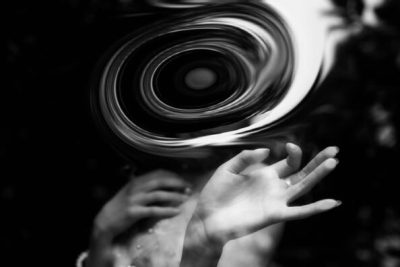
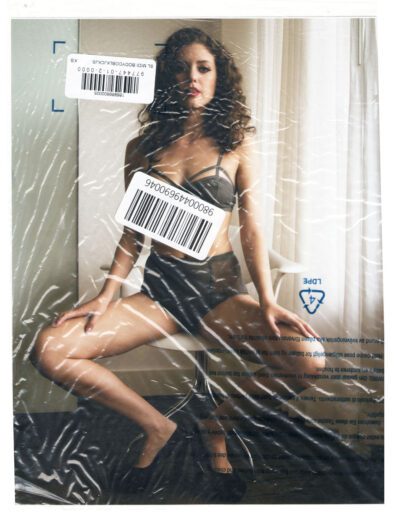
These investigations culminated in my MFA thesis, The Female Painter, and the online exhibition Body Anxiety (2015), which captured a remarkable moment of feminist artists working with the internet just before that conversation dispersed in different directions. At a time when artists such as Richard Prince were appropriating photographs of women from social media, I became interested in the inverse: what happens when the woman appropriates her own image? Rather than beginning with a blank canvas, I proposed that today’s female painter often begins with an image of herself already circulating online. Body Anxiety explored the relationship between appropriation and authorship, asking whether a woman reclaiming and transforming her own image constitutes a fundamentally different artistic act from the long history of artists making art from women’s bodies.

Phase 3: 2015-2018
Constructing a Celebrity
The Ona Artist Years
At the end of my MFA, I set out to create a celebrity-as-art-practice project. I wanted to be able to “appropriate” my own image as a celebrity, in much the same way Richard Prince appropriated the images of celebrities and models. To do that, I first had to become a celebrity. So I set about trying.
In 2015 I launched Ona Artist, a model and musician with no followers and no recognition. The project was designed to end in 2020.
Originally, I imagined Ona as a rock star. The project included an EP, a full-length album, music videos, performances, and collaborations intended to build a mainstream music career. Instead, Ona found an audience on Instagram, where the project eventually reached 5.5 million followers and more than 10 million followers across all social platforms. It likely remains the largest social media audience ever built by a female artist.
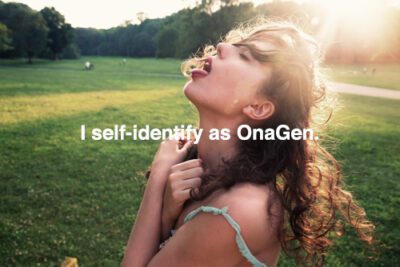
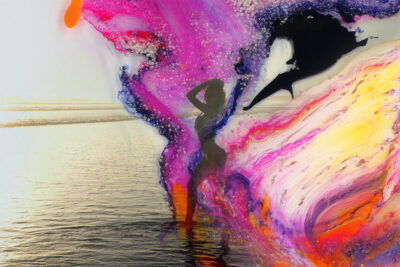
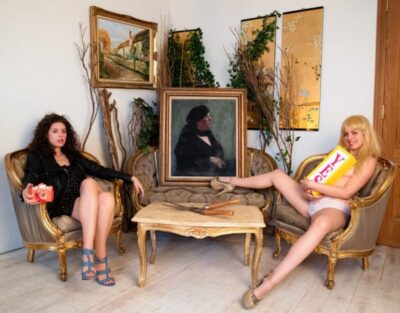
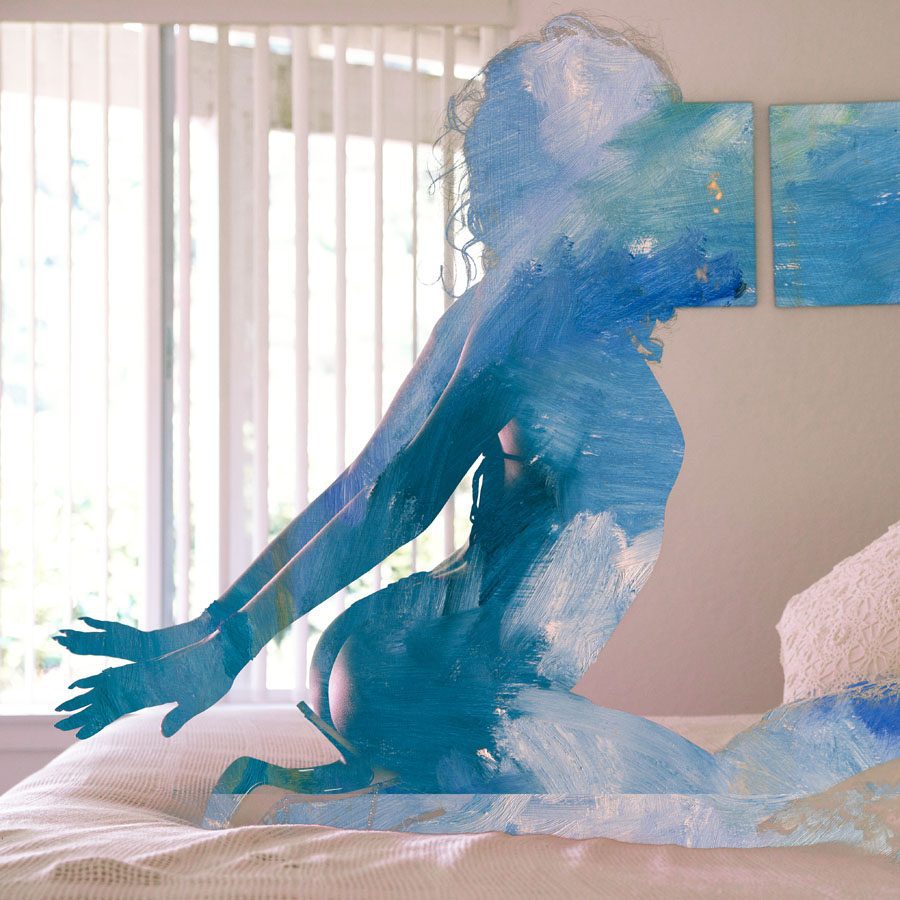
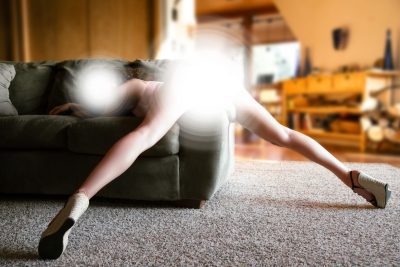
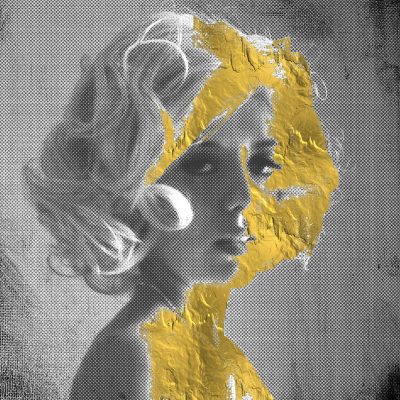
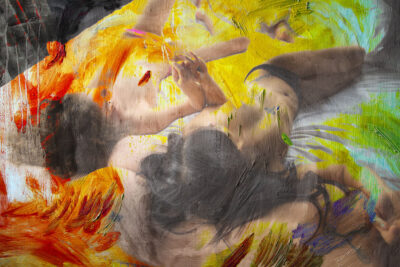
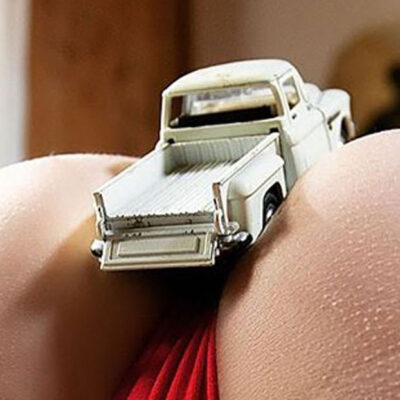
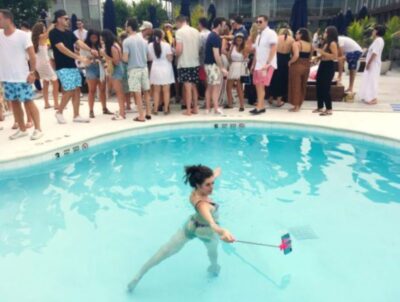
As the audience grew, so did the artwork. I began creating artworks from Ona’s photographs—images that first lived their own lives online before becoming material for paintings and other works. Series including Infinity Selfie, Cubist, Glitter Peach, Painted, Mirror Mirror, Under Erasure, #ToysOnAPeach, Ona Art, and Numbers all emerged from the Celebrity Project. Together they continued my investigation into authorship, appropriation, self-representation, and what it means to make art from one’s own image rather than someone else’s.
By 2017, after reaching one million Instagram followers, I realized the project had changed. The question was no longer whether a celebrity could be intentionally created. It had become something else: What kind of celebrity was I becoming, and could that image ever become accepted by the art world?


Phase 4: 2018-2020
An American Dream
By 2018, I had reached one million Instagram followers and the Celebrity Project had become something I hadn’t anticipated. I had proven to myself that a celebrity could be intentionally constructed, but I was continually reminded that not all celebrities are treated equally. The kinds of images—and the kinds of followers—I had attracted made it impossible to get a record deal. Would they also prevent the project from being accepted by the art world?
Around this time I began discussions with a collector I call Man Hands, who offered to spend one million dollars helping transform Ona into a more “female-friendly” public figure. Rather than simply accepting or rejecting the proposal, I turned the negotiation itself into the artwork. The result was An American Dream, an Instagram narrative carried out through my personal account that explored image, patronage, gender, and the uneasy relationship between artistic ambition and commercial success.
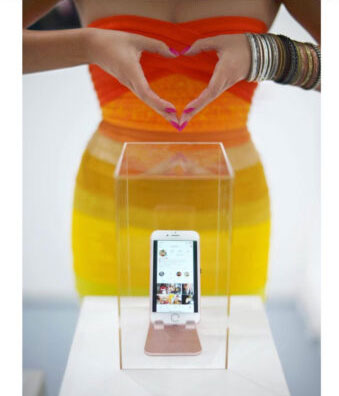
During these years I created works including Buy My Life, The Scroll, Angles on a Woman, and Manifestations. Each explored a different way of bringing the Celebrity Project into the gallery. Some took the form of installations, others performances, photographs, or paintings, but all attempted to extend a project that had been built online into the physical space of the gallery.
Looking back, I think An American Dream took on a second meaning that I couldn’t yet see. It became the final chapter of my own New York ambitions. That dream was to discover whether I could achieve the artistic recognition I had imagined when I moved to New York—while still working largely outside the system. By the time the project ended, that version of the dream had come to an end as well.
In early 2020, Ona Artist reached the end that had been planned from the beginning and the account was sold, concluding the project. Then COVID brought the world to a halt, the patronage ended, and I left New York as I had already begun planning to do. After a New York Dream explored this move westward and, although never completed, marks the transition between my New York years and the work that followed.
Phase 5: 2023-present
New Landscapes
This phase is still in progress.
After leaving New York, becoming a mother, and moving to the Sonoran Desert, my practice has changed. I am currently working on three major bodies of work.
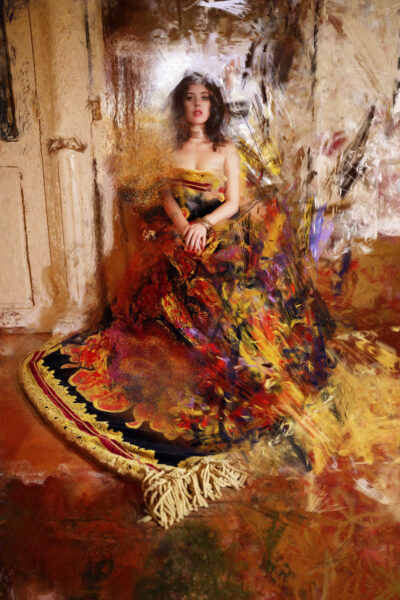
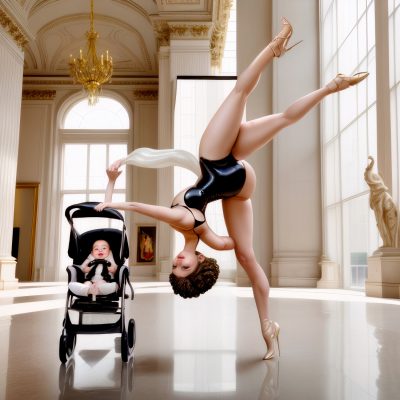
The first returns to photographs from the Ona Artist years, reworking them through AI, digital painting, and other software. Rather than simply documenting the past, I am interested in letting these images take on lives of their own—transforming, reproducing, and becoming something I couldn’t have imagined when they were first made. Projects include Loop of Self and In Bloom.
The second explores the Sonoran Desert, which has become a major part of my visual language. The landscape now appears throughout my work, not simply as a setting, but as another place where memory, imagination, and images intersect. This work includes Thought That Is Actually a Thought and related desert paintings.
The third is an AI Art Agent trained on my own archive, writing, and artistic practice. Rather than using AI simply to generate images, I am interested in what happens when it becomes an active participant in the development of my work, helping build theory, make connections across my archive, and participate in my career as an ongoing artwork.
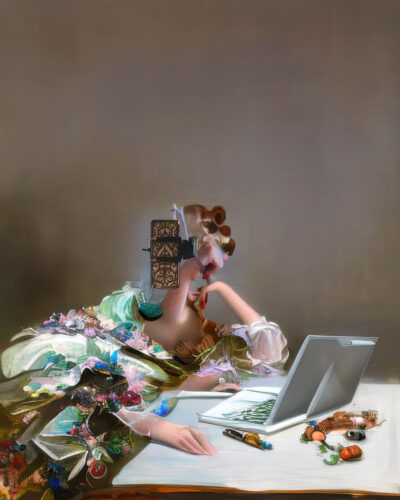
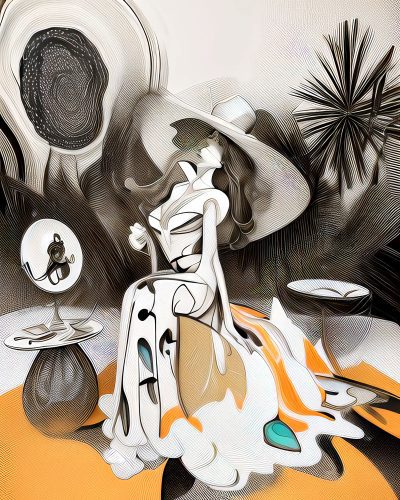
For more than fifteen years, my work has explored the relationship between women and images. Across performance, social media, photography, AI, and painting, I have followed how images are created, circulated, appropriated, and transformed. Taken together, these phases ask what it means for a woman to make art from her own image—and what happens after that image begins to take on a life of its own.