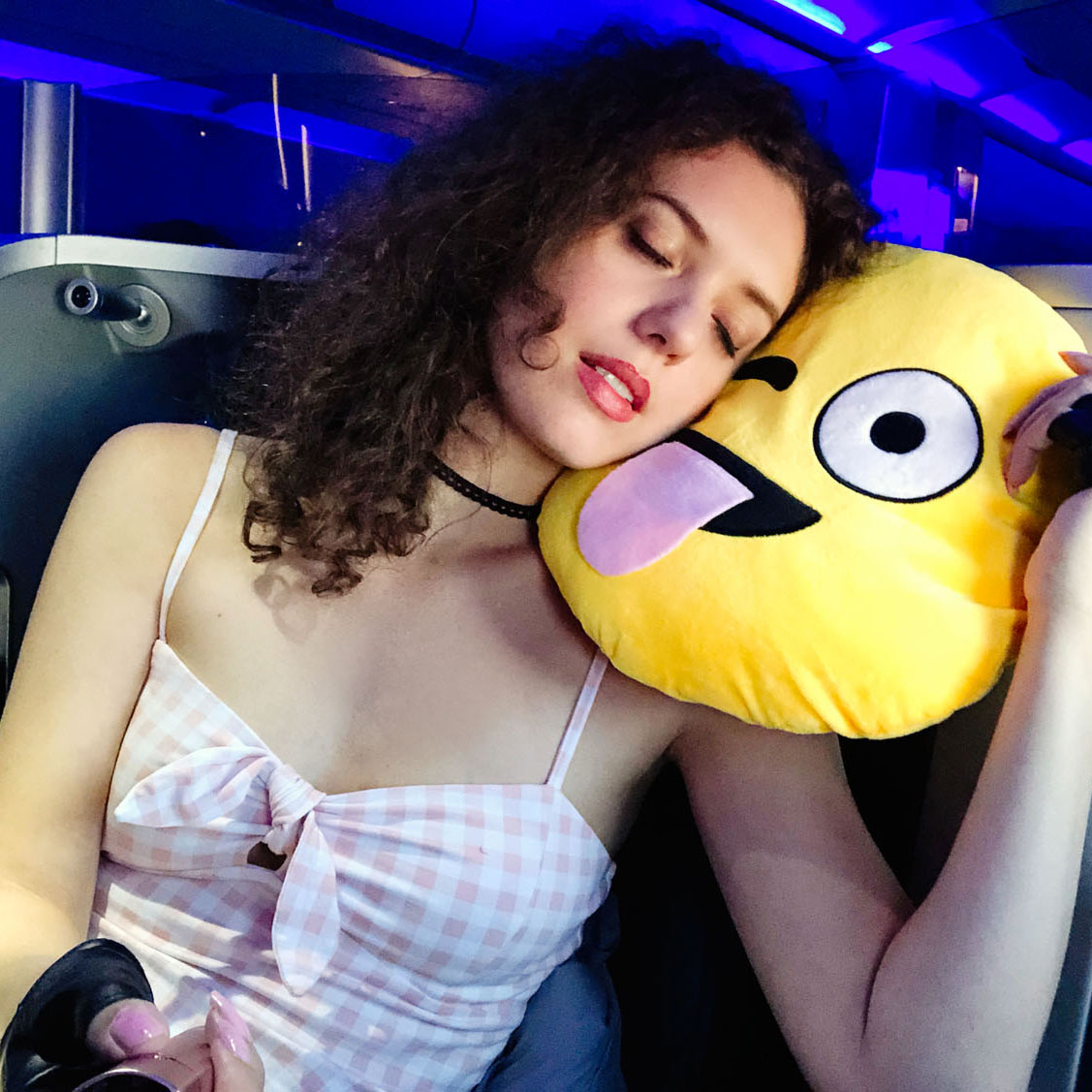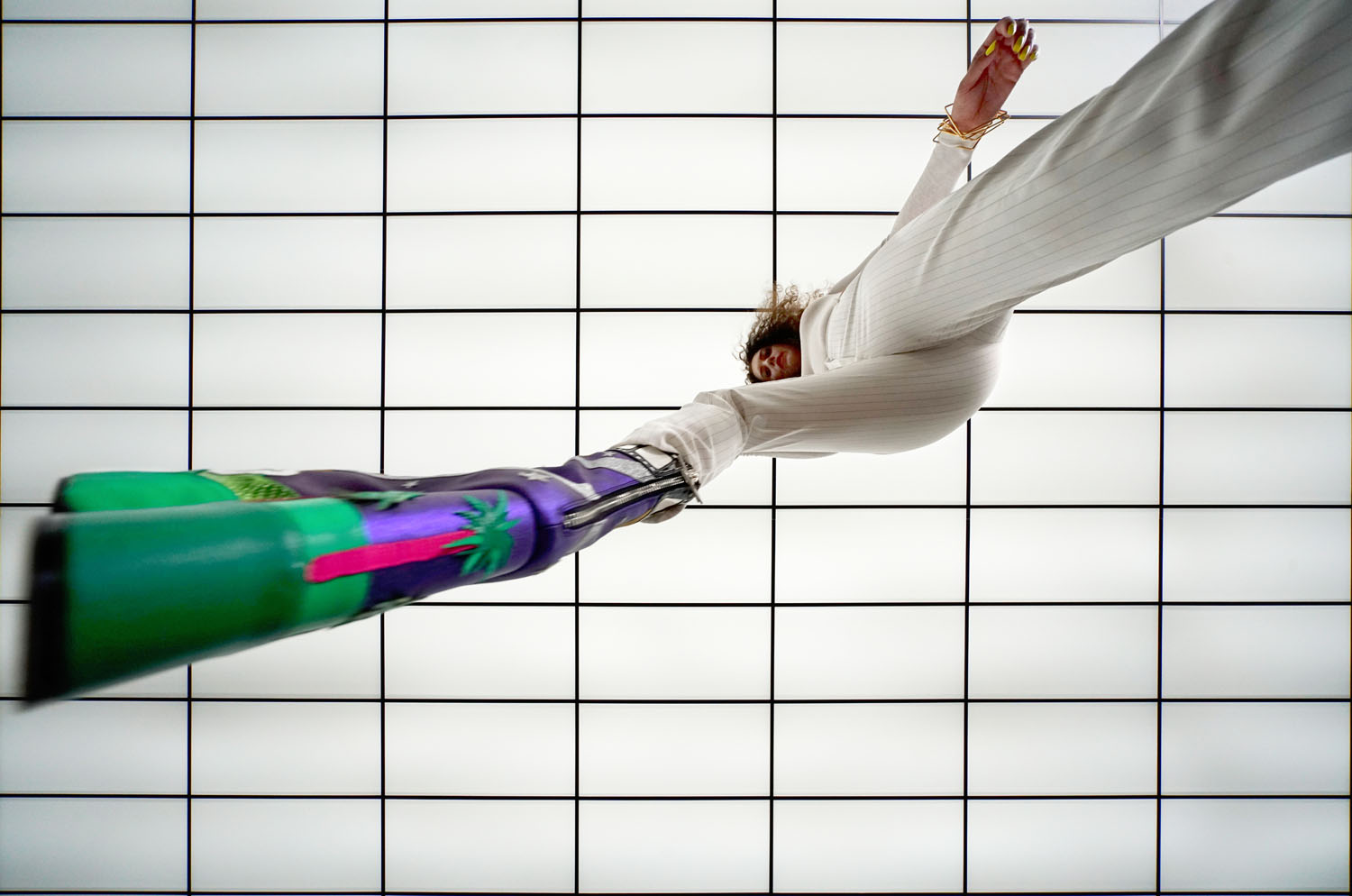
In 2015, I set out to create a celebrity as an art practice.

The celebrity reached millions of followers on Instagram.

She produced music, artworks, exhibitions, and performances.

A patron offered $1 million to make her more acceptable.

The artist and celebrity began to change places.

The transformation was negotiated in public.

The Instagram account was sold in 2020.

sittingfinalbsm-1280x1002
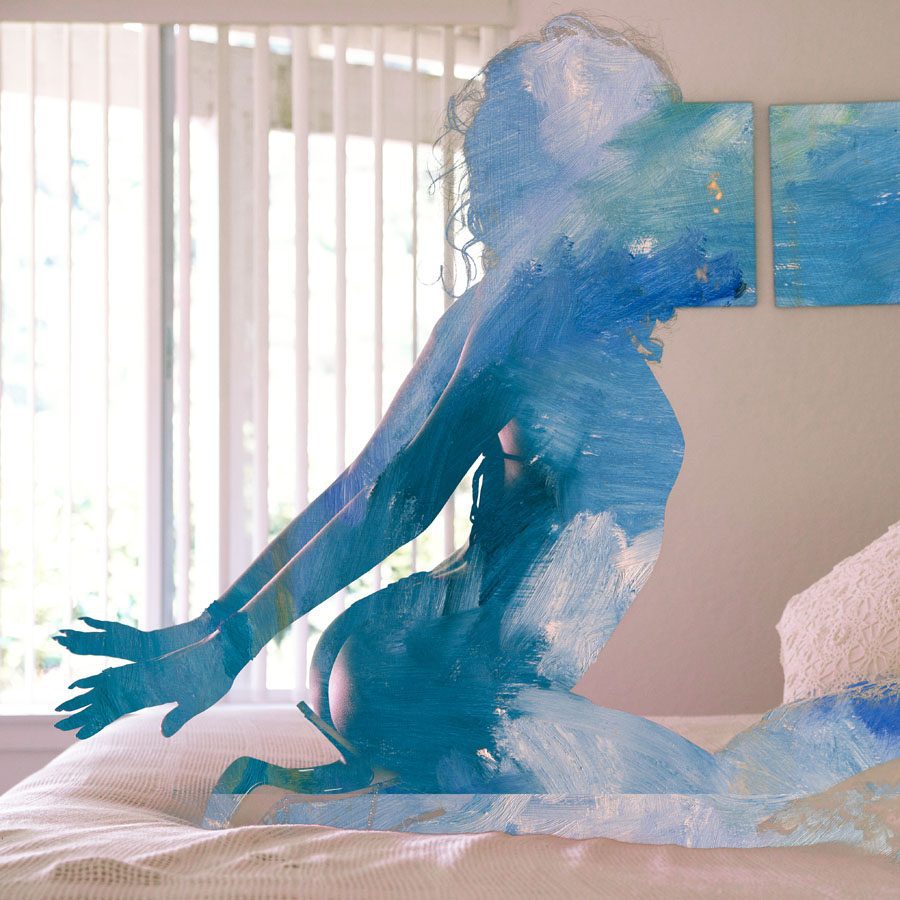
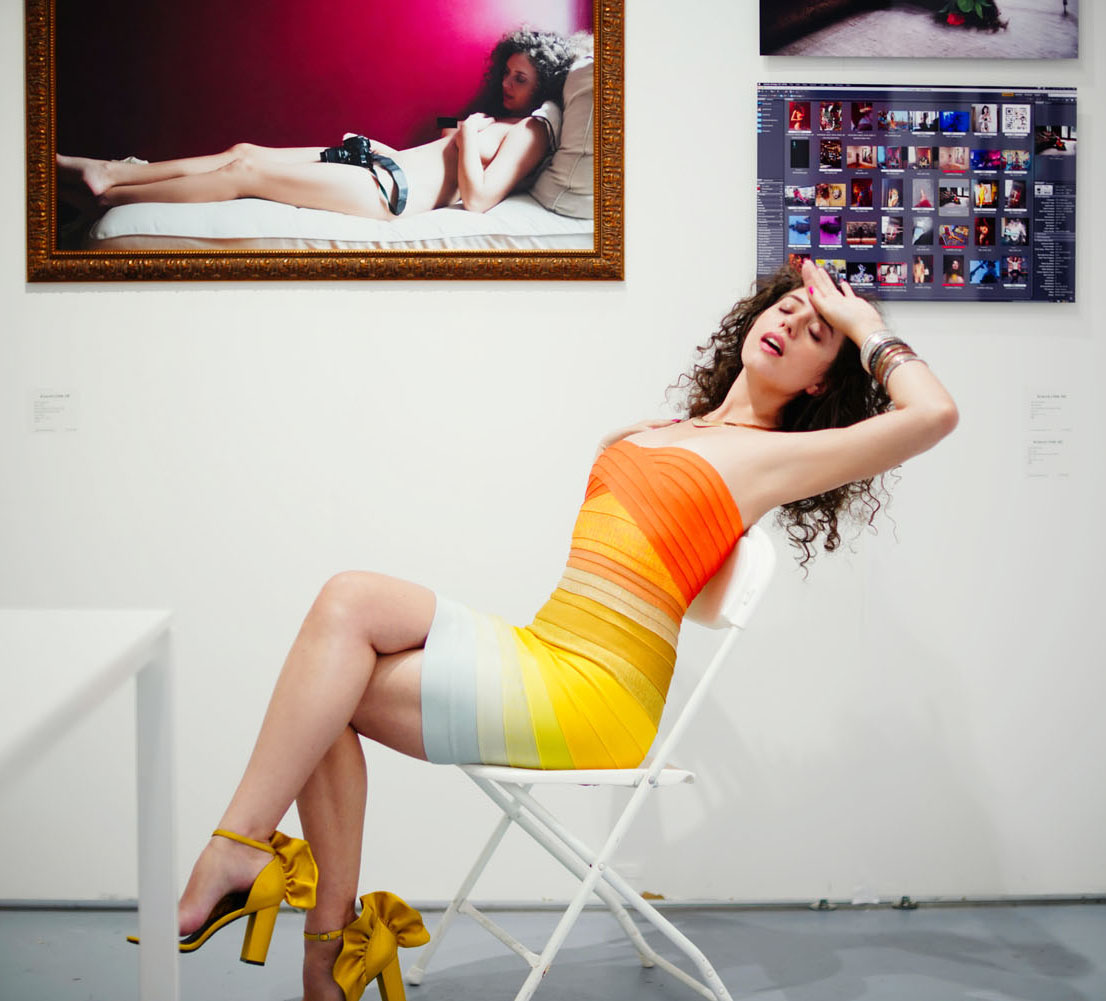
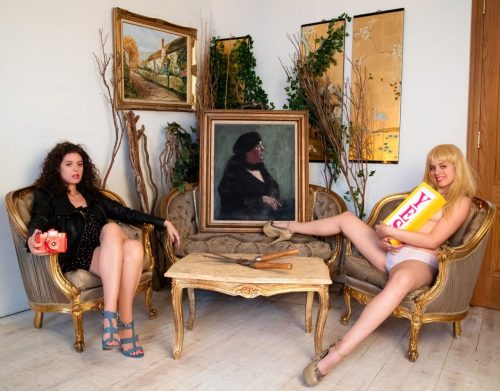
Leah (left) & Ona (right)

In 2015 I began ONA, my celebrity-as-art-practice project. Its central question: Could I create a celebrity as an intentional art practice?

At the time I had been using my own image in my artwork for years. It gave the work a perspective that felt both conceptually and artistically direct, an idea I explored in my essay The Female Painter. Appropriation artists such as Richard Prince often worked with images of models and celebrities. I had already become both the model and the artist. But I was not yet a celebrity. I wanted to be able to appropriate—or simply use—my own image in my artwork as a celebrity.

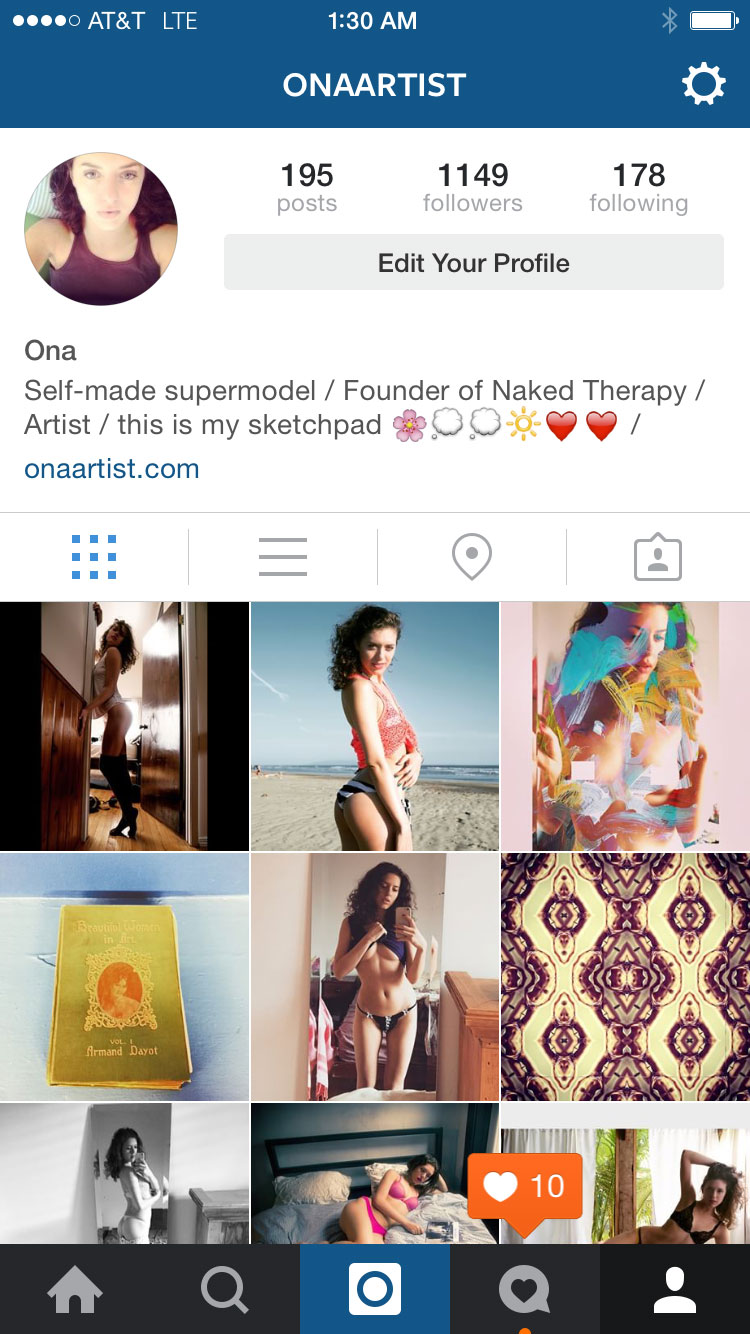
I set out to manufacture a real-world celebrity from scratch: DIY, fully self-made, and self-funded. ONA was conceived as a musician, artist, and model whose creation would itself be a conceptual artwork. As the project grew, it generated press, music releases, exhibitions, performances, and an increasingly devoted audience. Starting from zero followers, ONA eventually reached over 5.5 million followers on Instagram. 

Along the way, the project attracted the attention of a patron figure I would come to call “Man Hands.” He believed that ONA was preventing me from being recognized as the artist I could be, and that a different image—one more acceptable to mainstream cultural institutions—would be better. The focus gradually shifted from growing ONA’s audience to creating distance from her. ONA increasingly became the subject of the work rather than its primary vehicle, as the project explored whether Leah Schrager might achieve a form of cultural acceptance that ONA could not. His intervention would eventually become a second chapter of the project: The Acceptable Woman.

ONA was among the earliest art projects to use Instagram not simply as a platform for documentation, but as a central site of production, performance, and audience engagement. At a time when most artist-run Instagram projects remained niche or relied on purchased audiences, ONA grew to millions of followers organically, making it the largest Instagram of any female artist. 

Through ONA, I explored female performance and celebrity, what is—and isn’t—permitted in the mainstream and in art, and shared my music, pro-sex feminist message, and celebrations of life, art, and sexuality. At its core, the project asked whether a woman could control the creation, circulation, and monetization of her own image at scale without relying on what I called “Man Hands”—the gatekeepers, photographers, managers, and institutions that have historically mediated female representation. The resulting works became an investigation into fame, image ownership, artistic freedom, and the limits of cultural acceptance.

Questions:
Can a celebrity be created as an artwork?
What makes a woman acceptable?
Who gets credit for a woman’s work?
What kinds of female visibility are rewarded, and what kinds are disavowed?
Can a woman be both hyper-visible and legible as an artist?

2015: Creating ONA

ONA launched in 2015 with three intentionally ambitious goals: ten million Instagram followers, one million song downloads, and a photo of her ass on the cover of Rolling Stone by 2020. To pursue them, I began building ONA as a musician, artist, and model simultaneously. I released music, developed the project’s visual identity, and started growing the Instagram account from zero followers while exhibiting related works in galleries and writing about the project. What began as a conceptual experiment quickly became a daily practice of creating content, interacting with fans, and learning how attention moves through digital platforms.

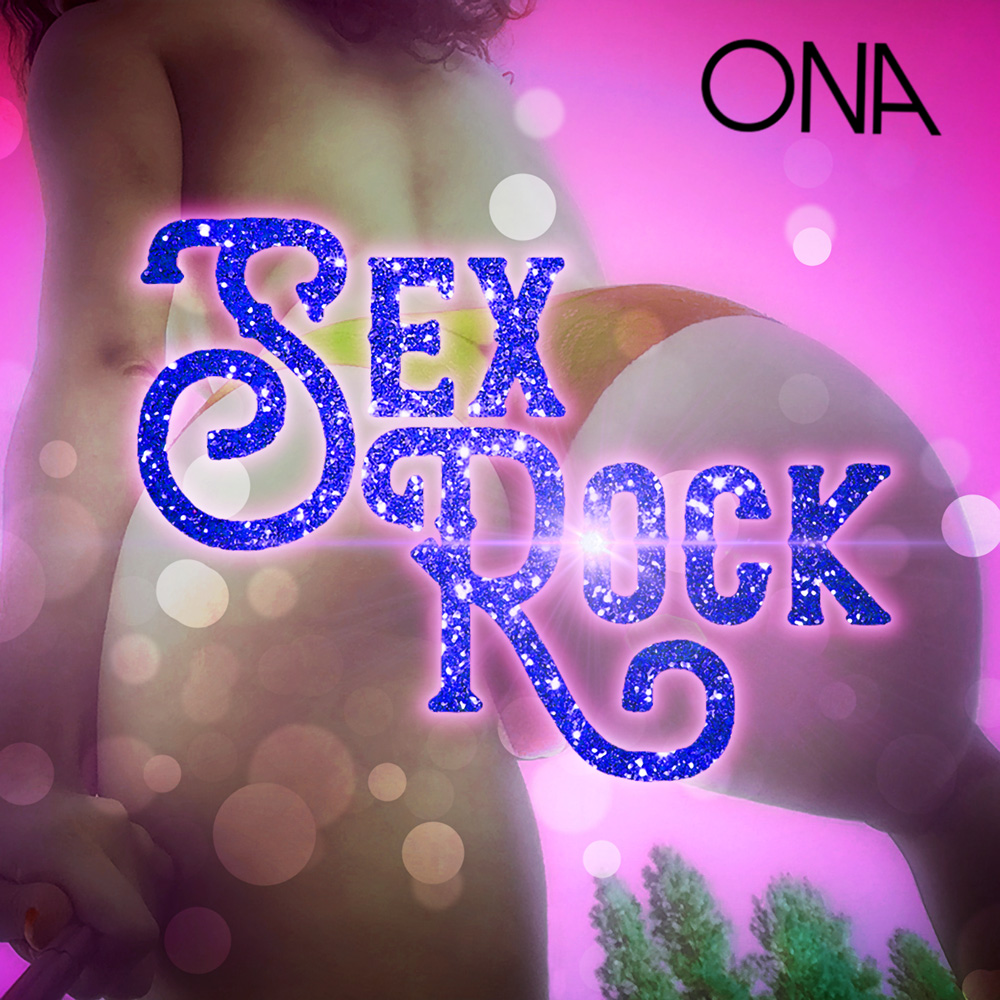
The first ONA exhibition took place at Superchief Gallery in New York. Works included 50 Favorite IG Comments From Fans and screenshots of Instagram posts with favorite comments highlighted, with 10% of each sale awarded to the commenter. During this period I also released ONA’s first EP, Sex Rock.

Interview excerpt from Dazed in 2016ish.

Q: Tell me about the Celebrity Project. How did the premise come about? What are you trying to say by becoming Ona?

The Celebrity Project started in 2015 and involves the creation of a musician/artist/model named Ona and the attempt to make her a celebrity by achieving the following by 2020: 1) a photo of her ass on the cover of Rolling Stone, 2) 1 million song downloads, and 3) 10 million Instagram followers. It’s also an evolving question – what does it mean to make a celebrity as an art practice? – so far it includes being fully in charge of manufacturing all elements of her artistry, marketing and imagery, and documenting my experience as a kind of social, aesthetic and emotional adventure.

The idea came to me in the last semester of my MFA program when professors (and some students) kept saying that the images of myself that I was placing in my art were too sexy to be art. But when I looked around, I saw a few things. First, there was plenty of “sexy” in the art world – it was just women presented by what I call “man hands” (images by male photographers or works that appropriate the images of models or celebrities). Second, I saw hypocrisy because so many art world people seem to love mainstream (industry-sanctioned) celebrities and they incessantly listened to their music and watched their movies. Finally, I felt there was a kind of puritanical art world prejudice against women using their bodies in a sexy way in their art. I first experienced this when I was kicked out of the West Chelsea Artists Open Studio in 2012 because the director said my work was an “ad” and not “art.” So I decided to eschew appropriation, fight the hypocrisy, and subvert puritanism by creating a DIY sexy celebrity as an art practice, or what I recently called in Rhizome “a self-made supermodel.”

Social media, particularly Instagram, has been central to this project. I’m really fascinated with online interaction and the dynamics of fandom. Inevitably, I think anyone trying to grow a social media account is engaged in their own celebrity project, so I view what I’m doing to be a kind of metaphor for the general trend toward a universal adoption of the practice of micro-celebrity creation.

What has the reaction been by online users? Do they know that you are an artist?

I have had great reactions from male fans and have been surprisingly welcomed into the Instagram modelling world. Many of my fans tell me I’m an awesome artist just based on the photos I put on my IG, which now has over 400,000 followers. I also share my music and videos and sometimes my visual art there as well. Some of my followers know I’m also an “artist” and some don’t – it depends on their interest. All they have to do is look a little deeper, but some don’t care to. It doesn’t matter to me.

But in the end my IG aesthetic actually isn’t mainstream-celebrity or Instagram-standard. I’m quite influenced by Cindy Sherman, and my photos come from 100s of different locations and my goal is to explore different looks (as opposed to pushing a single image brand). While this isn’t the norm for someone seeking to become a celebrity, it is true to my artistic nature and is one way I’m trying to be an artist and celebrity at once.

2016: it might actually work

As ONA’s audience grew into the hundreds of thousands, the project began to shift from conceptual proposal to lived reality. What started as an artistic experiment increasingly resembled the celebrity it was attempting to create. For the first time, it seemed possible that the experiment might actually work.

Midway through its second year, I presented an investor presentation at Johannes Vogt Gallery in East Hampton. Borrowing the format of a technology startup pitch deck, the presentation outlined ONA’s growth, strategy, and future plans. The accompanying press release described the work as an attempt to create a “Female Elvis,” while I began referring to ONA as a “Naked Rockstar.”

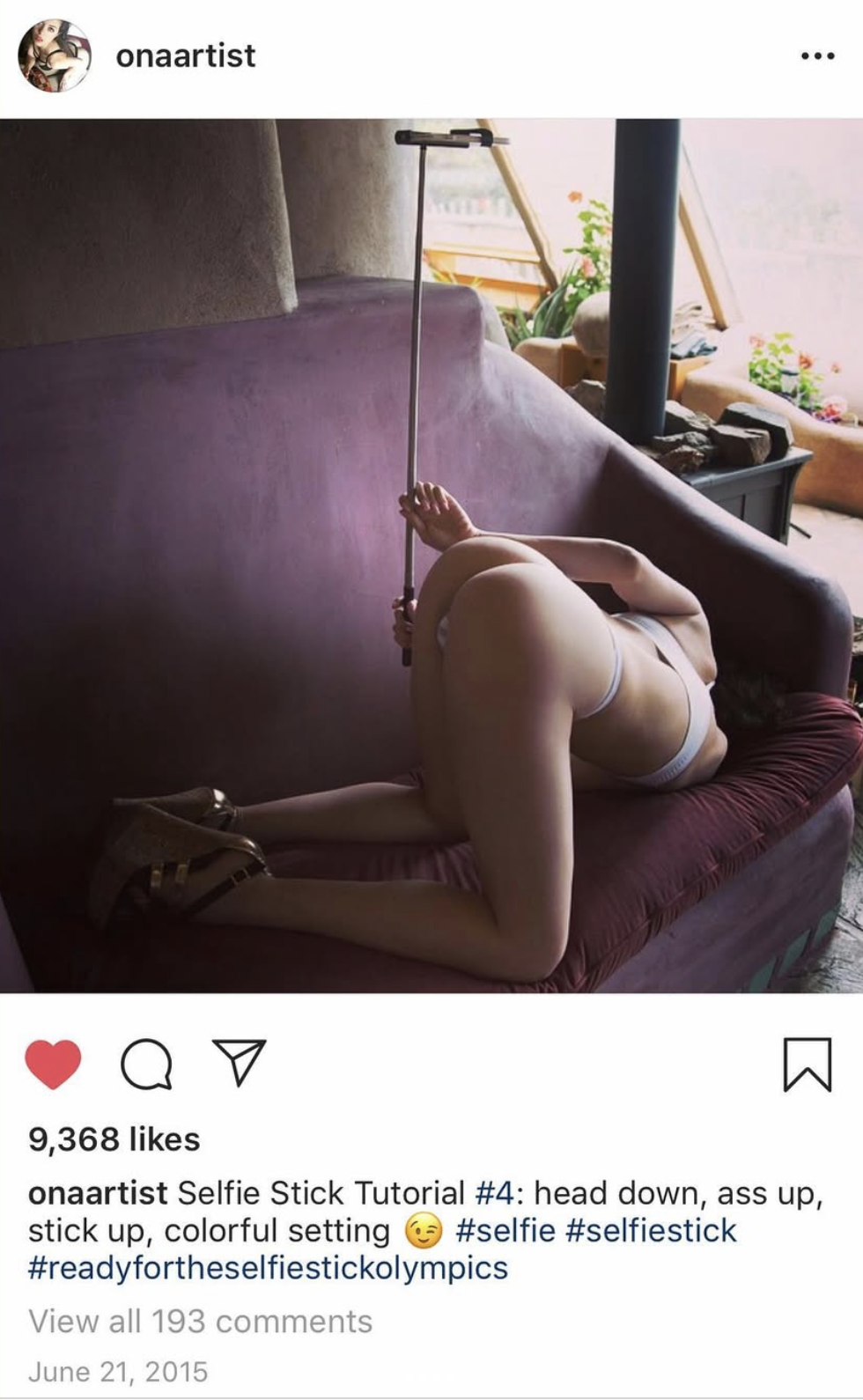
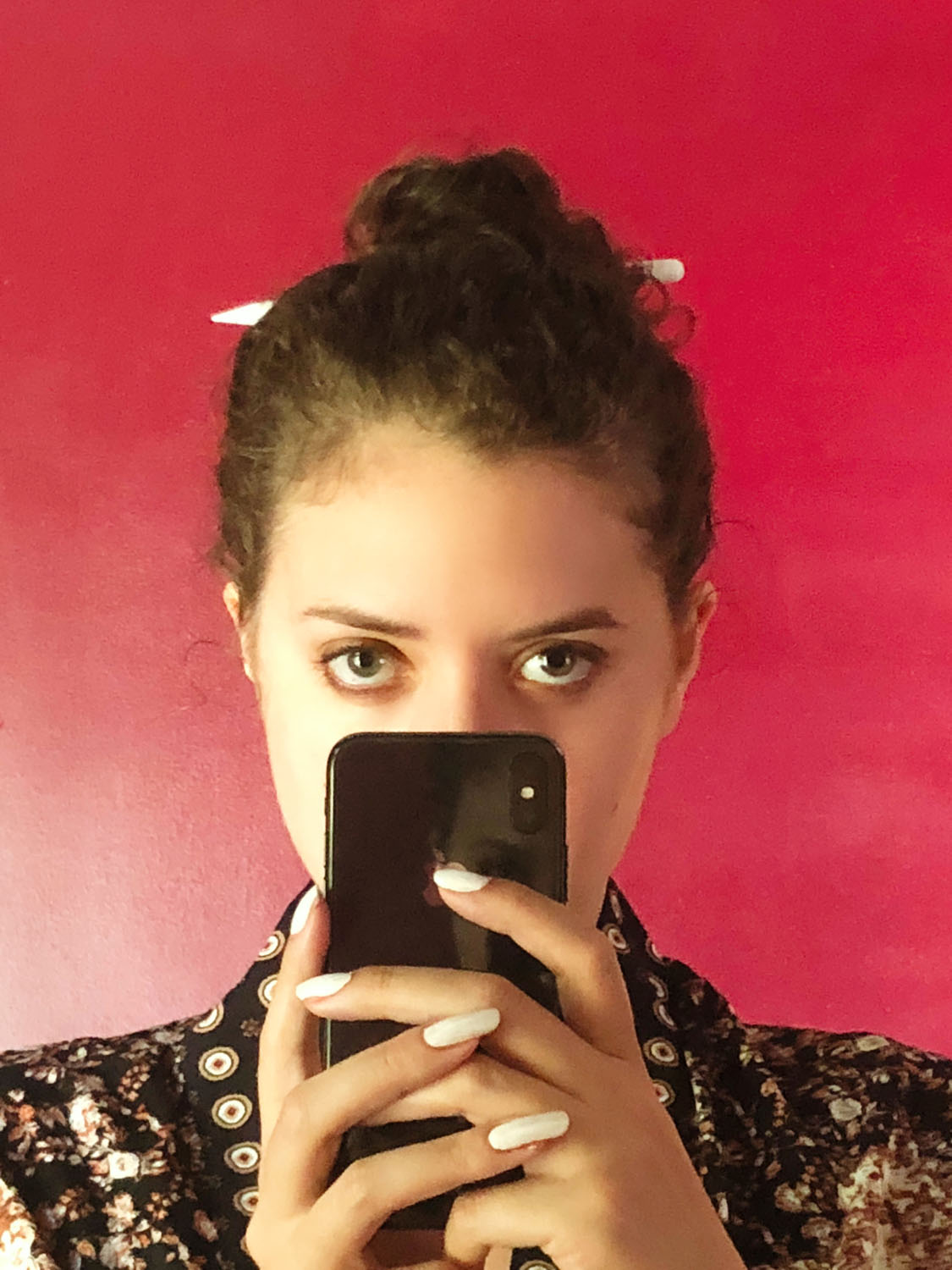
At the same time, I was stretching the bounds of modeling on Instagram. I coined the Meta-Selfie: a photo of me taking a photo. I was developing new ways of representing the body through social media, and it became a central part of ONA’s visual language. They were experiments in self-representation that emerged directly from social media rather than from fashion photography or traditional portraiture. Many of ONA’s signature poses and visual strategies were developed during this period as I searched for new ways of representing the body on Instagram.

Later that year, ONA’s Year 2 exhibition was presented at the former Vanity Fair offices in Times Square as part of SPRING/BREAK Art Show. As the audience continued to grow, I began publicly theorizing the project through essays and exhibitions, exploring how social media, celebrity, performance, and female representation were becoming increasingly intertwined.

Published in Thought Catalogue

By Ona Artist

An article about my fight to save rock-n-roll by providing my fans with naked photos and videos of me.*

1, 2, 3, 4…

While it might be hard to imagine now, when Elvis started shaking his pelvis on American TV to a new form of music called rock-n-roll, the world exploded like a hyper dense ball of repressed gunpowder. As Time Magazine puts it, “Elvis Presley, the performer, was all about sex — it may have only been the suggestion of sex, but it was there all the same, in the sneer, the gyration, the raised eyebrow. And that unfettered sex appeal represented everything American parents wanted to suppress in the mid-1950s. Wanted to — but couldn’t.” This eruption of sexuality via rock music became THE template for numerous manifestations of screaming, swooning girls (and the guys who want to be around them), from the Beatles and Prince to Bruno Mars and One Direction.

Now, of course, women are making music, and yet something is different. For all of the pole dancing, nipple slipping, and straight up sex talking of Madonna, Beyonce, Britney, Rihanna, Minaj, Miley, Lana, et al., I think it’s super important to make note of one simple fact: the “sex appeal” these female performers provide to their audiences is categorically different from the “sex appeal” that many male performers provide to their audiences. These female performers are not eliciting sexual arousal in their fans, because their fans are predominantly straight women. What they are eliciting is a sense of empowerment in their fans, and that’s profoundly different than what the King was doing with his thing.

Female fans want to hear and see their female singers sexually empower them and their male singers to sexually arouse them, and the things those singers do for this female audience are the meat and potatoes of pop media coverage. Male fans, on the other hand, require something completely different for sexual empowerment and arousal than female fans. For empowerment, they turn to acts like Linkin Park, Lil Wayne, and Daft Punk. And these entertainers are covered big time by pop media. But for sexual arousal? Men don’t turn to music performers, they turn to porn performers, and this massive fandom environment is definitely NOT covered by popular media.

In other words, female music stars have evolved into actually a-sexualized beings (in the sense of “sexualized” meaning “attempting to elicit sexual arousal”) who have broken the core bond that has always been at the heart of rock-n-roll: the elicitation by the performer of sexual arousal in the audience. Let me put that another way. If a female performer seeking a male audience wanted to equal the sexual arousal power of the sharply dressed Beatles singing “I want to hold your hand” to a female audience, she’d have to sing “I want to suck your cock” either fully or mostly naked to a male audience. Problem is, if she did that, she’d get no press, no label, no sales, no tour, and she’d have to just stick to the only market where her attitude is remunerated: porn.

So why has this happened, and what does it all mean?

It’s happened because America is still fucking puritan, duh. The forces that boycotted Elvis and burned Beatles records and lobbied for explicit warning labels on NWA albums got a makeover and now run the media power establishment of Huffpost and Google News and BuzzFeed and every other media portal that owns everything via billions of web hits. They DO NOT cover female entertainers who are eliciting arousal from a male audience, because that is porn and it’s NSFW.

In other words, the Queens of Pop are actually ambassadors for the prudish family-centric forces that completely censor art through the simple act of non-coverage of all forms of porn, arousal-inducing nudity, and manifestations of male desire. Beyond empowerment they also provide women with the ultimate fantasy of not having to take your clothes off to attract or have power over men, just like Led Zeppelin and Jay Z provide men with the ultimate fantasy of being able to score tons of women because you’re a philandering drugged-up gangsta. Sure, some men listen to some female performers some of the time, but that’s just to enjoy the music, not to have the male version of the “screaming Beatles’ girls.” Women get to have all the music-based arousal they want because it’s child-friendly dapper loving John Mayer. Men aren’t allowed to have arousal with their music, so they go elsewhere: into the underground, the dark, the never spoken of, the uncovered, the shameful, the secret, the abominable, the naughty, the bad. You call that progress? Nope, that’s puritanism.

Now, we can all agree that another thing has historically hindered the development of male arousal-eliciting music: the prospect of 80,000 horny male fans in a single stadium being encouraged to feel sexually aroused by a female musician is just way different than the reality of 80,000 female fans being encouraged to feel the same thing (but in a female way) by a male musician. But now there’s the Internet, and in its own words, THIS. CHANGES. EVERYTHING. Fandom has a whole new realm: the computer in the man cave. Men can experience their arousal-eliciting female rock stars on their screen in private and wank off all they want and have that “screaming girl” experience, but in a man way. In that computer women can do whatever they want performatively because they’re digitally bodyguarded. And it can happen and grow at least somewhat via the personal online media accounts of the female performers. So, it has started.

And yet, one huge thing still stands in the way for such arousal-eliciting female performers, and that’s the paradox at the heart of feminism that keeps mainstream media from embracing them. On one side, feminists are pushing for women to have equal pay in the workplace and to smash glass ceilings, cuz there’s no power like economic power. On the other side, they’re against women exploiting their sexy (which ultimately means getting naked with the intent to elicit masturbation), because they claim it’s demeaning. But the fact is, men use their sexy all the time by being rich, wearing bespoke suits, and acting sensitive and educated. That’s sexy to women. What’s sexy to men? Something a bit less clothed. So, yeah, men got it easier. They can be supremely sexy just by staying safe for work. But because women can’t be, they are constantly slut-shamed.

In other words, if feminists and the mainstream media outlets that toe their line want to really empower women, they need to accept a few things. First, that there is a direct correlation in the entertainment industry between sexy and power. Second, what makes men sexy to women is completely different from what makes women sexy to men, and nothing is going to change that (i.e., we need to stop thinking we can change men’s minds about what is sexy). Most importantly, women need to be supported, just like men are, in doing whatever elicits the most sexual arousal from their fans, and the media needs to cover them just as much as they cover men doing that, even if it means covering women who also engage in NSFW content.

I want to be desired. I want to be sexual. I want my fans to want me. I want to have the right to stand up tall and proud while being supremely sexy just like male rock stars get to. And I don’t want to be slut-shamed for it. Rather, I want to be admired for it. That would be equality. That would be progress.

And that’s why I’m a naked rock star. Just like Timberlake can elicit arousal from his female audience by putting on his dashing suit and singing about love, I can elicit arousal from my male audience by taking off my bathing suit and singing about sex. If Farrell were to show his thing, he’d be shunned by his fans for doing something disgusting. If I show my thing, I’m loved by my fans for doing something arousing. Or, as I think of it, I’m a Female Elvis. Long live rock-n-roll.

Ona Artist’s band, ONA, will be releasing its first EP, Sex Rock, on February 26, 2016. Her music can be heard at OnaSong.com, and she can be seen at OnaGram.com.

*Listening trends are based on Spotify data. All genders described below are cis and straight. Generalizations are made for argument’s sake. And not all musical forms or performers are discussed.

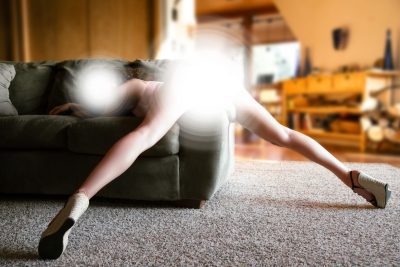
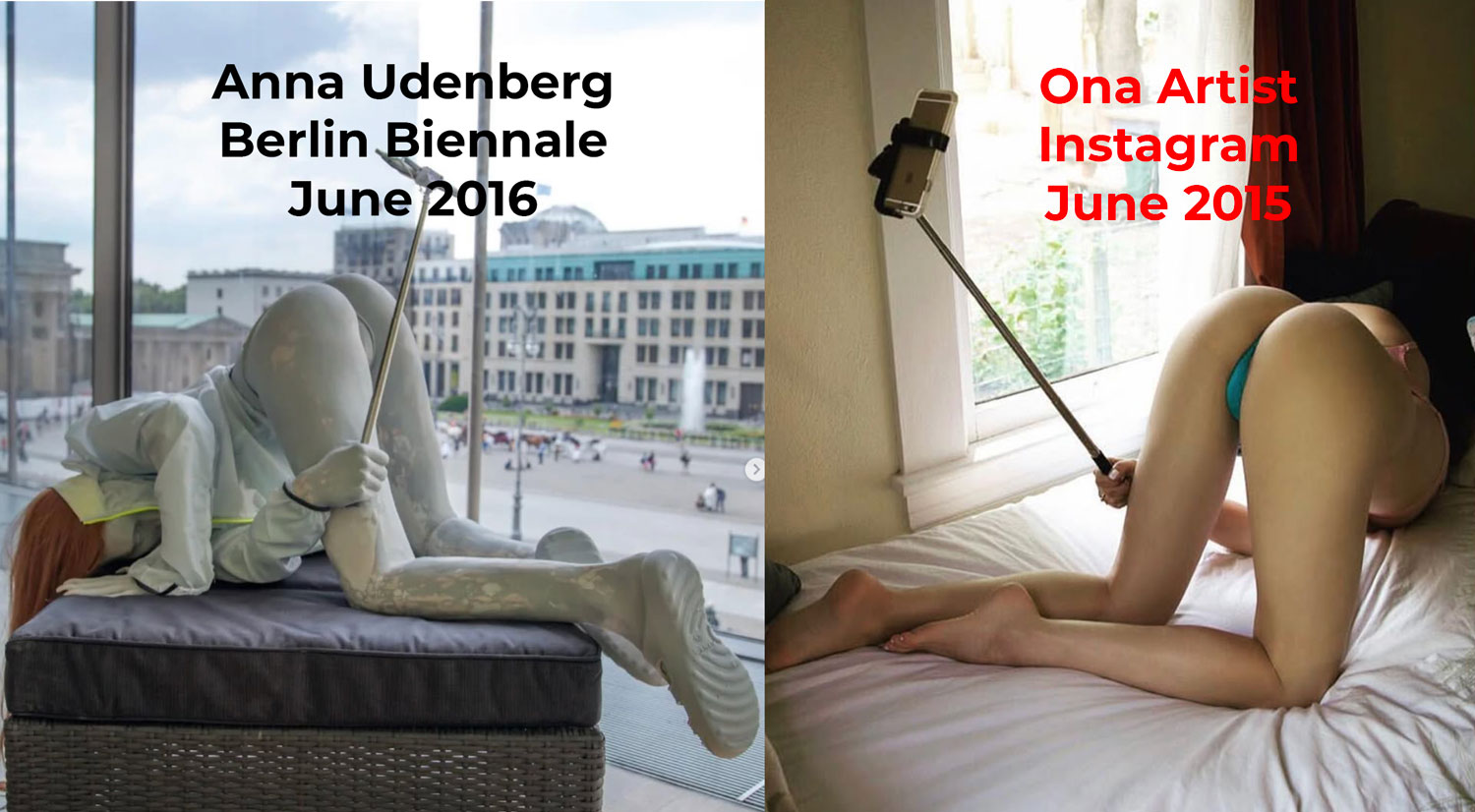
ONA discovered an iconic pose spontaneously during a photoshoot in New Mexico while experimenting with image-making for Instagram. It performed extremely well on the platform and quickly became one of the defining gestures of the project.

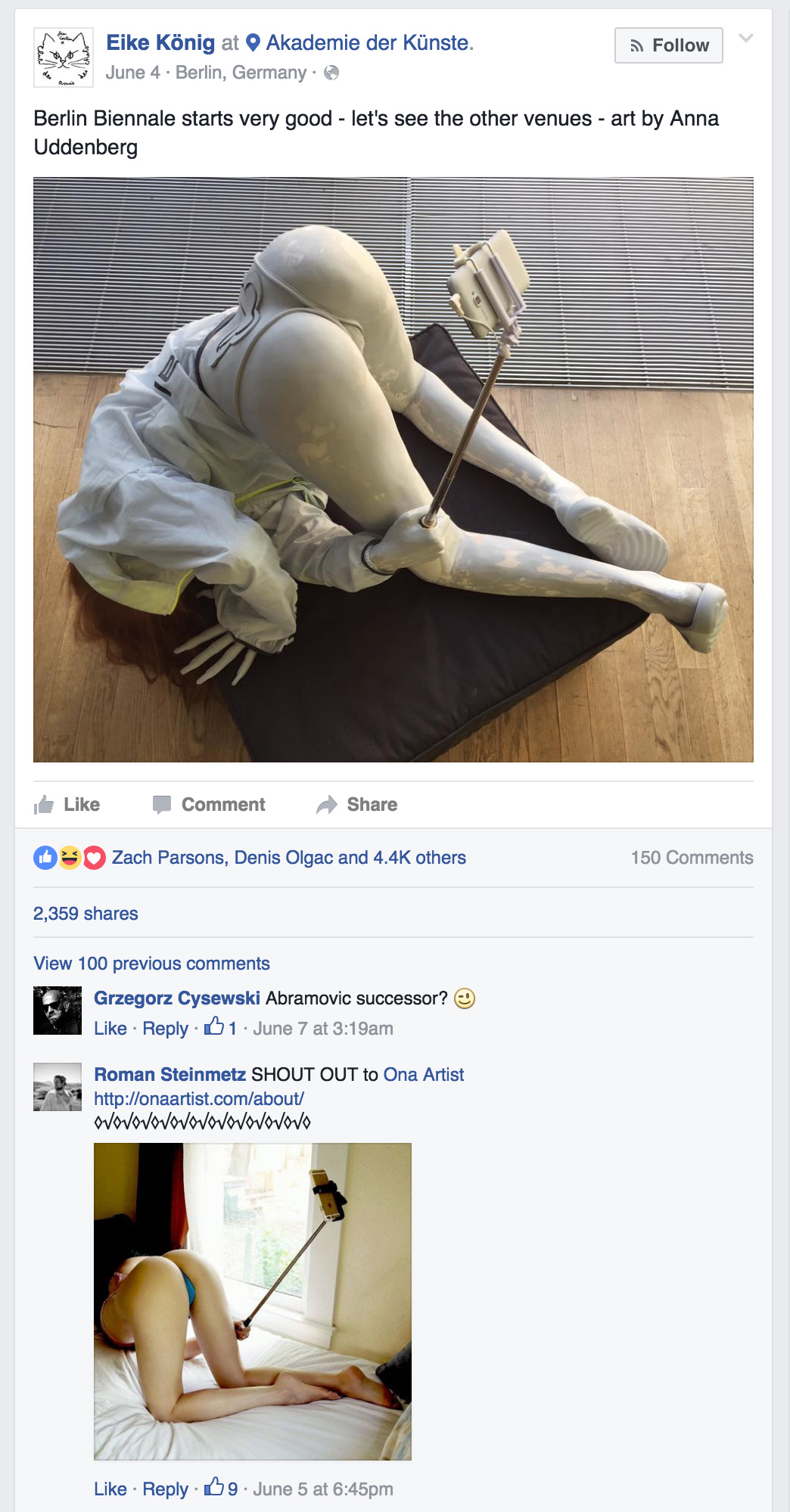
A year later, a follower pointed out its similarity to a sculpture by Anna Uddenberg that appeared in the 2016 Berlin Biennale.

Given the dates and the uniqueness of the pose, I find it difficult to believe the resemblance was purely coincidental. Here we have a situation that reflects a familiar pattern: a woman’s creative contribution being absorbed into the art world and credited elsewhere. ONA developed the pose independently through her own photographic practice, yet the version that entered institutional discourse became associated with a different author.

Included here are photographs of ONA using the pose in 2015, documentation of the Berlin Biennale sculpture, and a screenshot from the follower who first brought the similarity to my attention.
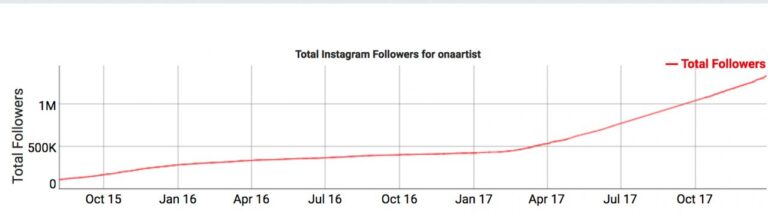
2017: One Million Followers

@OnaArtist reaching 1M Followers on Instagram.

In 2017, ONA surpassed one million Instagram followers. What had started as an art project had become a large audience and a full-time practice. Believing this milestone might represent a breakthrough into mainstream culture, I began documenting the project in a feature-length documentary. A filmmaker friend who had previously won Sundance believed the story might eventually find distribution through a major platform.

Around the same time, I attempted to secure a record label release for ONA’s first full-length album. Despite growing visibility and industry interest, no label was willing to take on a project so closely associated with an Instagram model. The album was ultimately self-released as Onamania alongside a series of related artworks. 

As ONA’s audience continued to grow, the project also began attracting significant press attention, with features appearing in publications including Playboy, Paper, Wonderland, Audiofemme, Dazed, and others. Yet despite this, opportunities within the mainstream music industry and broader celebrity culture remained elusive.

By this point, it had become increasingly clear that ONA’s growth was being driven primarily by a male audience. While that audience fueled the project’s success online, it also appeared to limit its acceptance within mainstream media, the music industry, and the art world. The question was no longer whether ONA could attract attention, but what kind of attention could make a celebrity.

“If you’re not familiar with ONA’s music, buckle up…The song cooks and its uptempo, driving indie rock showcases promise that goes beyond her traditional modeling.” – Pure Volume

“There are few singers and artists who are so unique, so individual, so highly talented that they’re known by just one name. Beyonce. Picasso. Madonna. Prince. Perhaps it’s time you add another name to that list: Ona. She’s both a singer and an artist. And as you’ll see on her Instagram or hear from her songs on Spotify, she’s a singular talent. So, let’s start your weekend off right: do yourself a solid and enjoy the undeniable sexiness of her one woman self-made photoshoot.” – Playboy

“Beautifully orchestrated, featuring melodic piano lines, ferocious crashing high-hat drums, and most notably Ona’s gorgeous, breathy alto vocals…one of the better tracks I’ve heard in a while…this record will undoubtedly be making our year end list.” – Audiofemme

“Lullaby sweet vocals with a cyber soundtrack … an ‘extreme selfie model’” – Wonderland

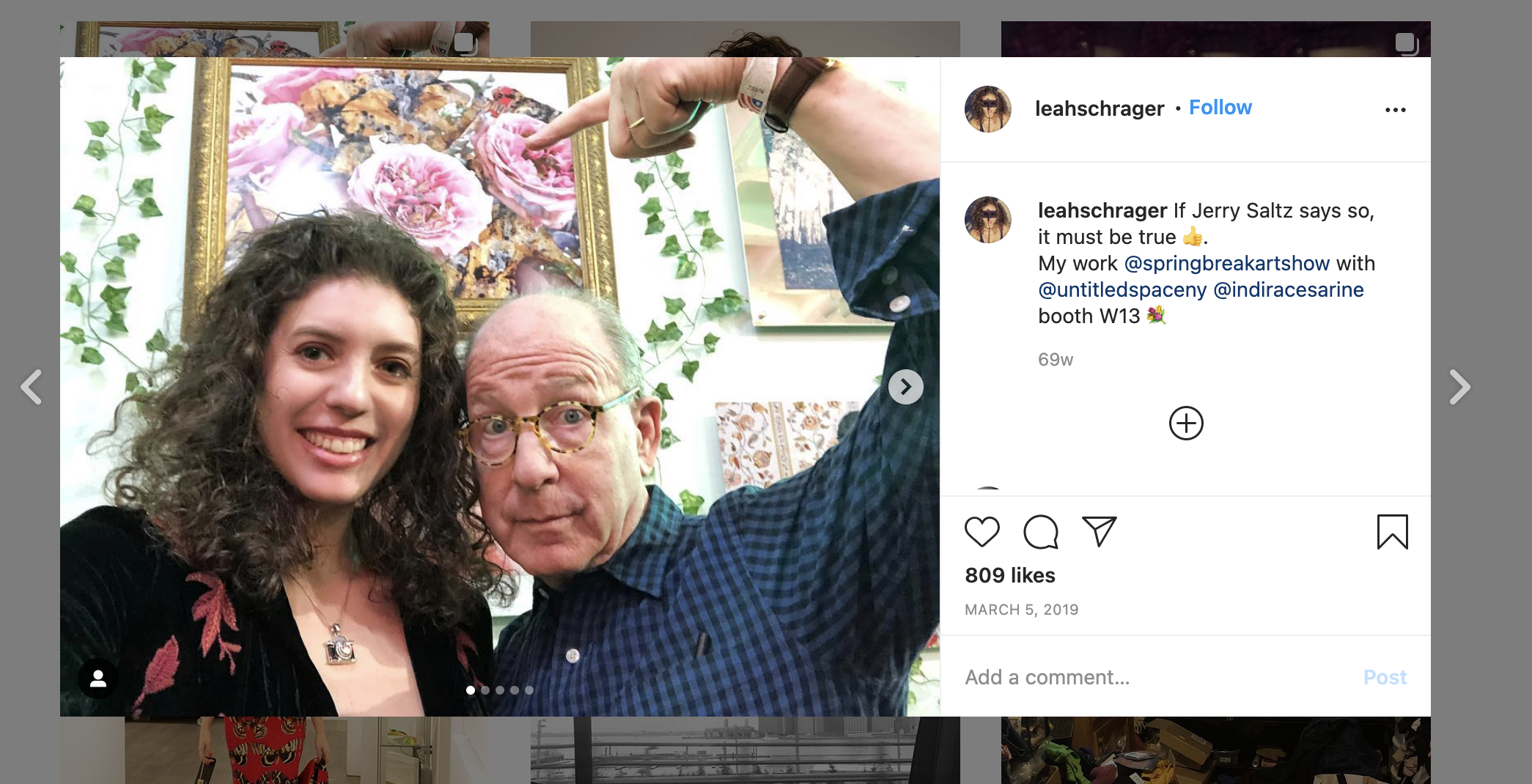
“Best title song ever.” – Jerry Saltz

“ONA — an objectively stunning woman who has worked her angles into hundreds of thousands of dollars, millions of followers, and a viable independent career. While the paparazzi may not be camped outside her Brooklyn, New York apartment like a traditional celebrity, ONA is certainly famous by 2018 standards…. Of course, this life does not come without sacrifice. Living publicly as a SW has seen everyone from family members to former classmates weigh in on her lifestyle… While it seems like movement to reclaim female sexuality is progressing in leaps and bounds, there’s still a long way to go, ONA asserts, but she is more happy to be in the trenches. PAPER caught up with the model to talk sex, more sex and rock ‘n’ roll.” – Paper

2018: The Acceptable Woman

In 2018, after I announced plans to make ONA’s Snapchat content more explicit, a fan approached me with an unusual proposal. He believed that ONA would never become a mainstream celebrity because the project appealed primarily to men. He also believed that ONA was overshadowing my artistic potential and that my work could reach a broader audience if I created a more female-friendly image and distanced myself from aspects of the persona that he felt were limiting its success.

The proposal eventually grew into The Acceptable Woman, a project I initially called An American Dream, centered around my relationship with a patron figure I came to call “Man Hands.” Part producer, part patron, part collaborator, and part antagonist, Man Hands offered me one million dollars to develop a narrative on my Leah Schrager Instagram that would create distance from ONA. Rather than continuing to focus on follower growth and online celebrity, the project shifted toward questions of artistic legitimacy, cultural acceptance, and whether ONA’s visibility had become an obstacle to Leah Schrager’s recognition.

What followed was a public negotiation on my Leah Schrager Instagram about fame, sexuality, image-making, artistic freedom, and success. Together we debated whether changing the image could change the outcome. If ONA had already achieved millions of followers, what would need to change for her to become acceptable to the audiences and institutions that still seemed out of reach? Could the art world ultimately accept Ona or Leah?

2019: Angles on a Woman

Following the sold-out presentation of The Acceptable Woman at Scope Miami Beach, the project continued through exhibitions, installations, performances, and online interventions.

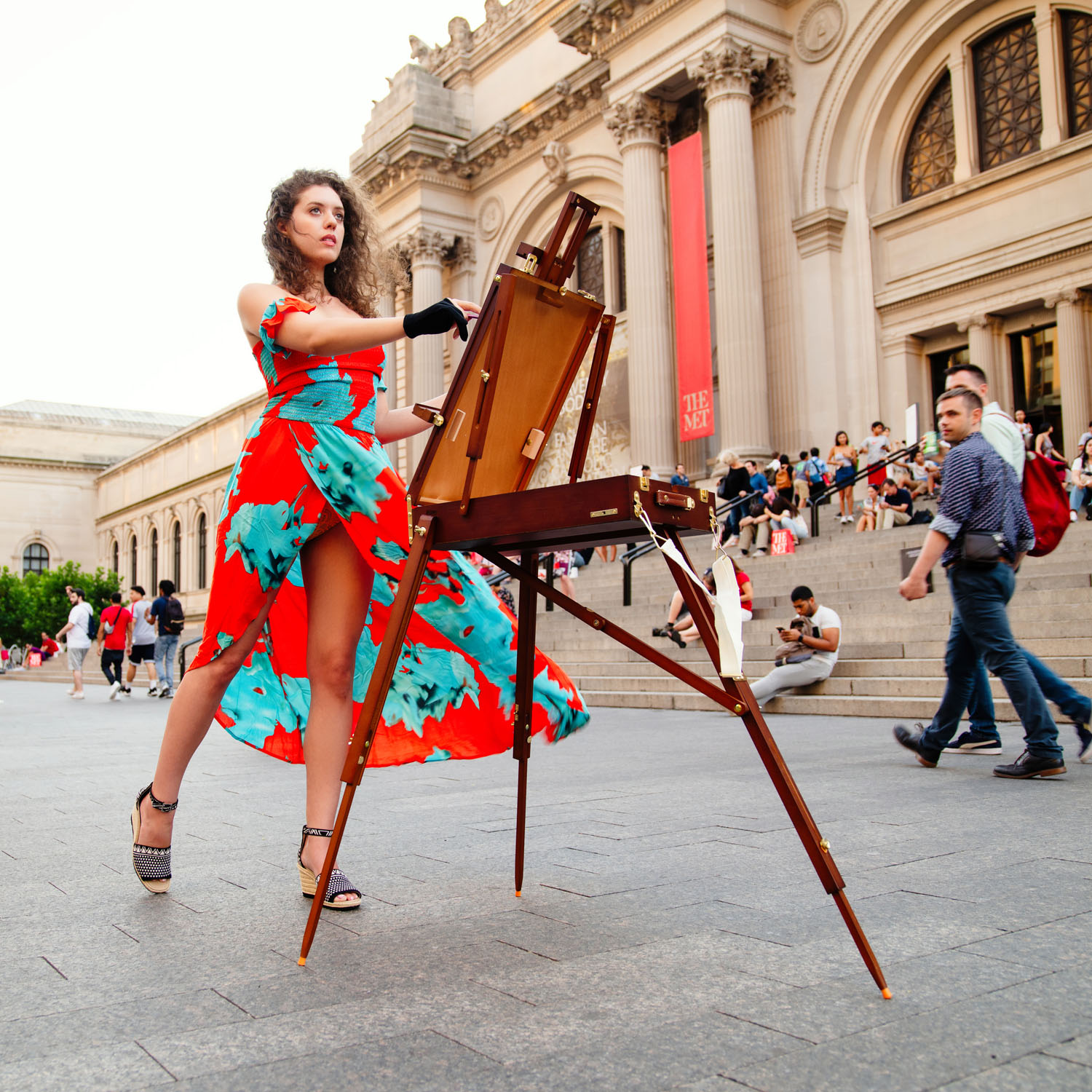
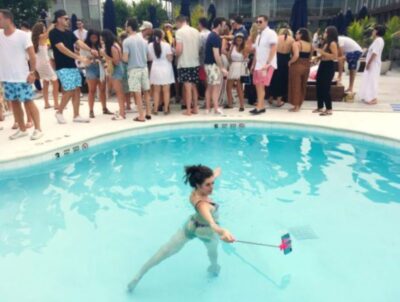
That summer I presented Angles on a Woman at the Montauk Beach House, my first live performance. The work transformed my image-making process into a three-act performance: photographing, processing, and posting. By using different poses, camera angles, and methods of presentation, I embodied multiple versions of womanhood while simultaneously producing images for different online audiences.

During the performance, a bystander recorded a short video clip and uploaded it online. The video was eventually reposted by Barstool Sports and viewed by tens of millions of people. Stripped of its original context and redistributed as entertainment, the performance became an unexpected extension of the artwork itself. The reactions echoed many of the questions at the center of the project: Who controls an image? Who gets credit for it? What separates an artist from a model, a celebrity, or a “thot”? And why can the same pose be read as art in one context and ridicule in another?

After Angles on a Woman went viral through Barstool Sports in 2019, the question of authorship and credit came back into focus for me. Barstool took 24 hours and 4 million views to credit me as the model in the video they posted. Around the same time, followers on my Leah Schrager account were accusing me of copying Anna Uddenberg’s Berlin Biennale sculpture, even though I had developed the pose through my own photographic practice before it appeared there.

As Anika Meier wrote in Monopol, “Bei ihr fehlt der institutionelle Rahmen, der anzeigt: Sie sehen Kunst.” In other words, what was missing in my case was the institutional frame that signals: you are looking at art.

That is the larger point for me. The pose became legible as critique once translated into sculpture, while its origin in my own body, image-making, and performance remained unacknowledged. I had addressed this directly in my Spring 2019 Scope show with a paper cutout titled Tag the Model,” highlighting how rampant content appropriation is on Instagram. The question is not only who made the pose first, but who gets recognized as the author of a visual language and who gets credit within the art and cultural context.

2020: The End of an ONA

By 2020, ONA had generated millions of followers, music releases, exhibitions, press coverage, and a substantial body of artwork. Yet the larger transformation promised by Man Hands had never fully materialized. ONA had become a successful celebrity project, but the attempt to convert that visibility into a more acceptable form of artistic and cultural recognition remained unresolved.

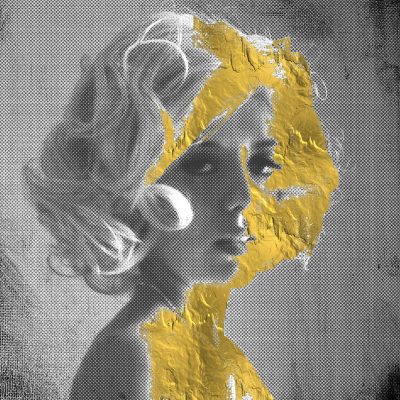
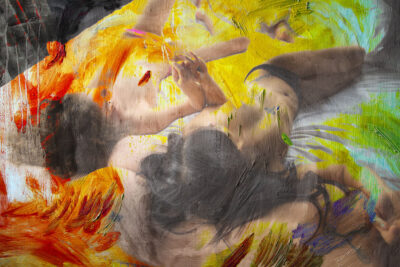
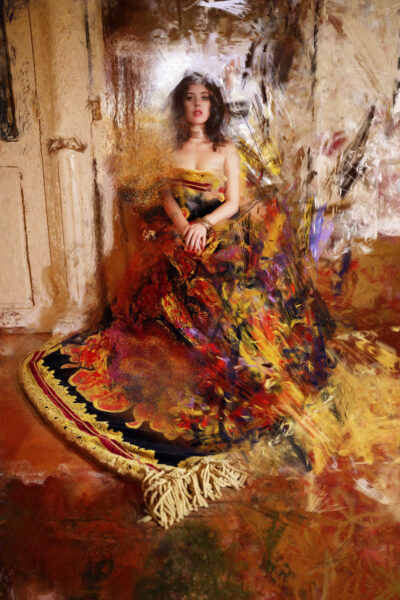
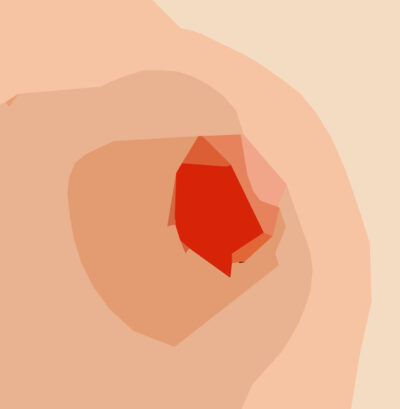
The final chapter of the project played out largely on Leah’s Instagram archive, where the logic of The Acceptable Woman reached its endpoint. It involved the alteration of Leah’s face toward a more mainstream ideal (referencing the first facial manipulation that was published in Paper Magazine), the culmination of the Goldfinger Suite, and a final series of increasingly abstract works that emerged after I viewed Frieze New York in 2019. These became the last body of work produced through the Man Hands collaboration, and the only possible ending to the task at hand.

When Man Hands’ funding ended and the COVID-19 pandemic disrupted much of the world, the project effectively came to a close. Soon afterward, I sold the ONA Instagram account, transforming the persona from an artwork into a business. ONA never achieved all of her original goals. But after five years of building a celebrity from scratch, selling her felt like the only possible ending.

Full Circle

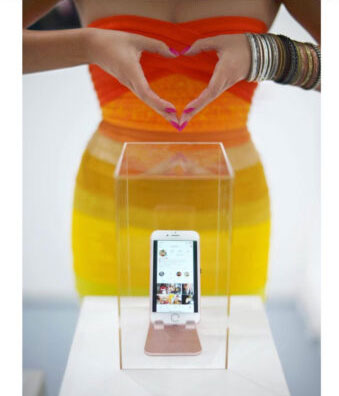
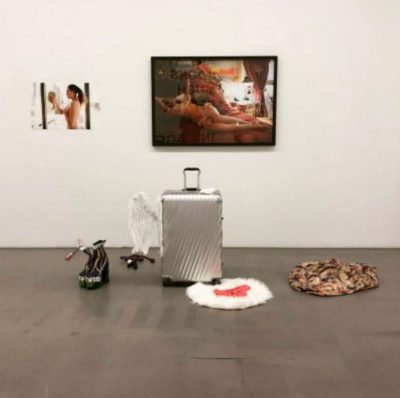
Installation at Museum der bildenden Künste Leipzig "Link in Bio" and live Skype performance.

ONA began with a question: could I create a celebrity as an art practice? The answer, I think, is yes. Over five years, ONA grew from a conceptual proposal into a real public figure with millions of followers, music releases, exhibitions, performances, press coverage, and a large body of visual work. By the time the project ended in 2020, ONA had reached 3 million Instagram followers, making it the largest Instagram project by a female artist.

But ONA also revealed a contradiction that became central to the work. The very thing that made her successful—her sexiness, her directness, her ability to attract a large male audience—also prevented her from being taken seriously by the mainstream culture and art world she was trying to enter. In that sense, ONA both succeeded and failed on the same terms. What made her visible was also what made her unacceptable.

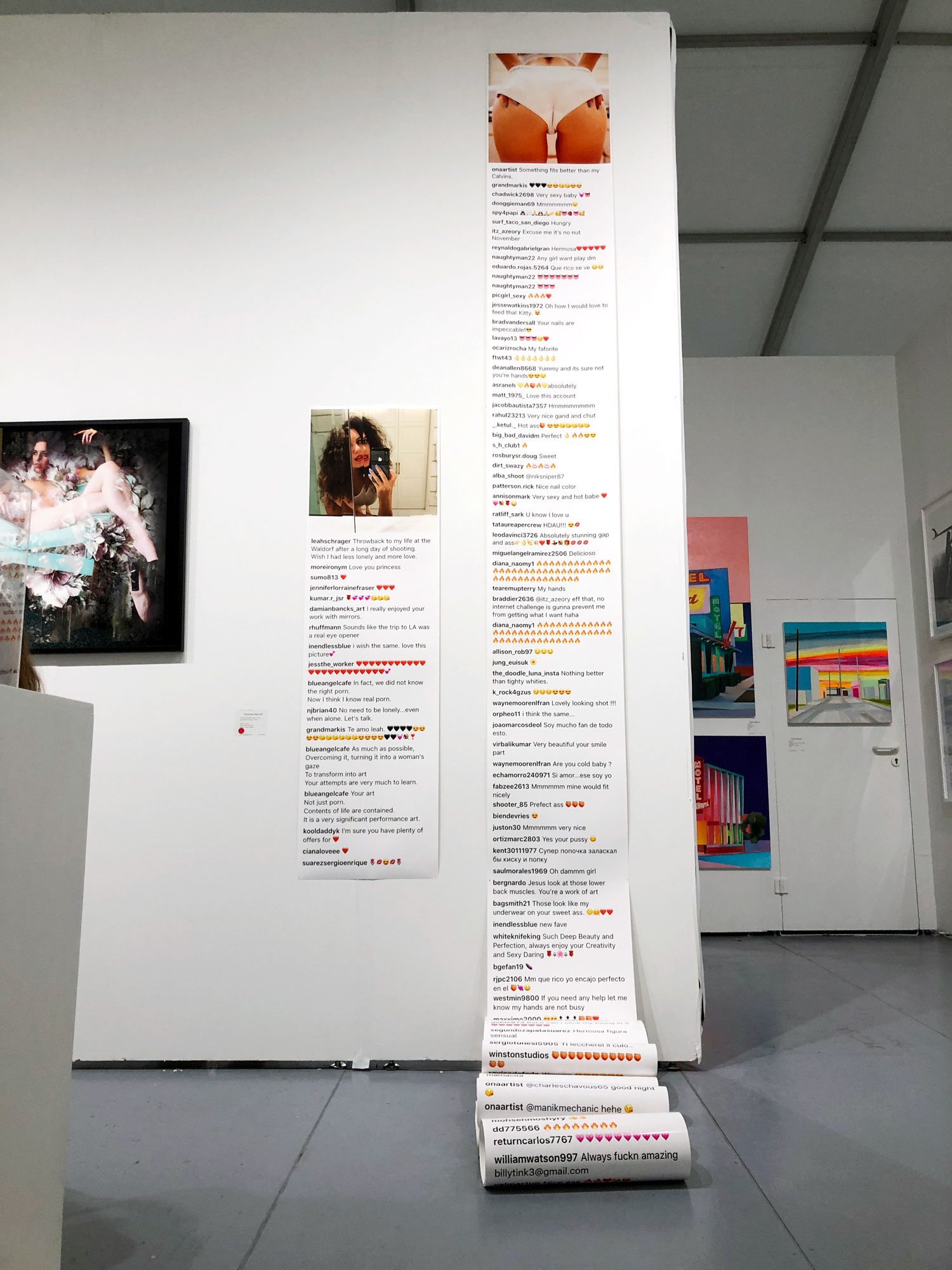
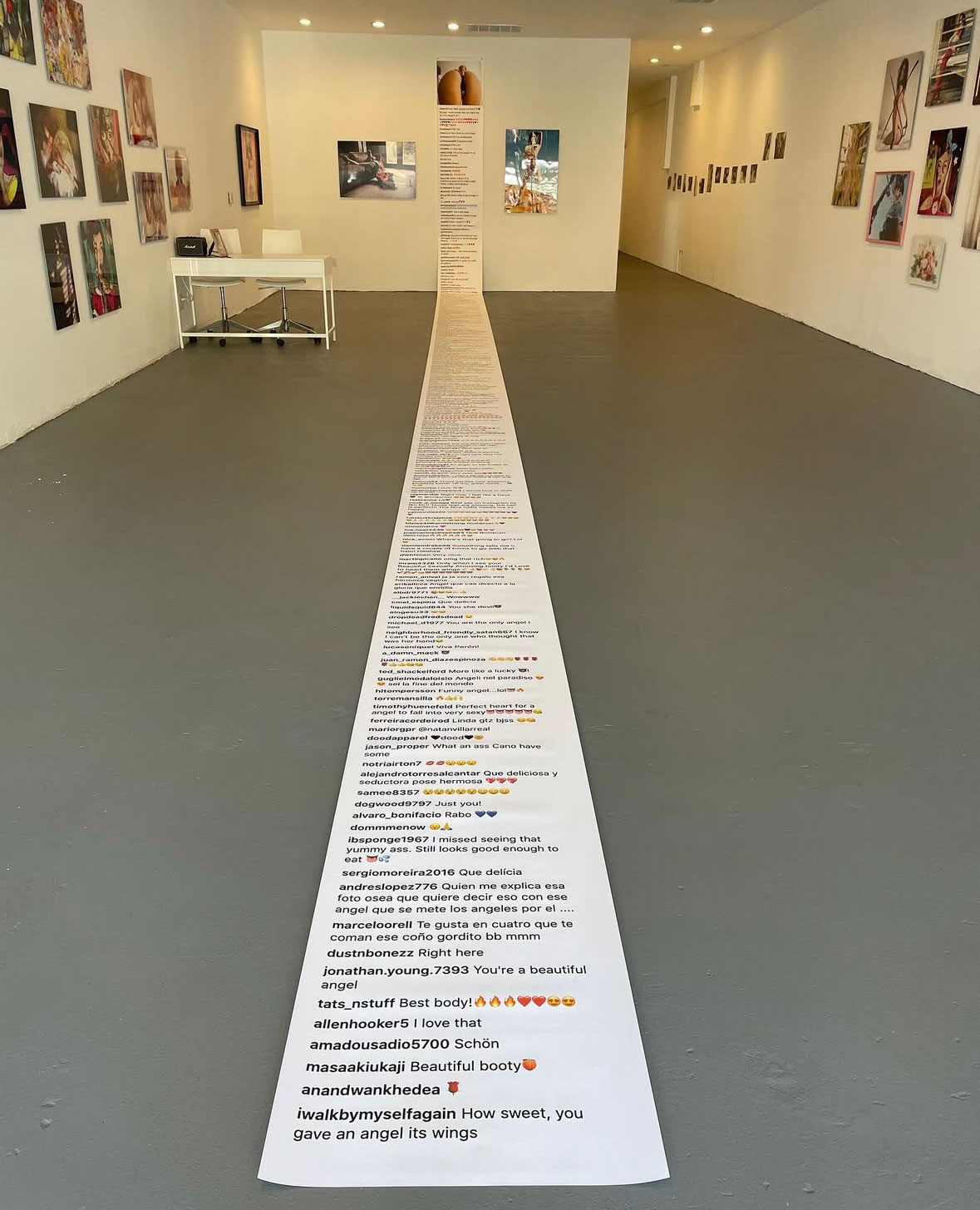
That contradiction became material for the work itself. I used the followers, the comments, the screenshots, and the numbers as artistic material. The Scroll turned online attention into form: thousands of comments, reactions, and judgments became evidence of what ONA had become and how she was being read. If artists like Richard Prince had long appropriated the images of models and celebrities, ONA collapsed those roles into one figure: artist, model, celebrity, subject, and medium all at once.

ONA did not achieve all of her original goals. She never became a mainstream celebrity, and she never achieved the kind of art world recognition I once imagined. But she did become something stranger and hopefully more interesting: a large-scale experiment in fame, gender, image ownership, and the economics of visibility at the exact moment social media was transforming all of them. ONA exposed what kinds of female visibility are rewarded and what kinds are disavowed. And, after five years of building a celebrity from scratch, selling her felt like the only possible ending.

The Scroll marks a real success within the project. Also known as Face Girl vs Ass Girl, it was a major attraction at my Scope booth in Miami, and sold immediately. I had not only built a celebrity from scratch, but built one large enough that her audience itself could become sculptural material. If appropriation artists such as Richard Prince had long used the images of celebrities and models, ONA allowed me to do something different: to create the celebrity, gather the audience, and then appropriate both myself and my followers into the work.

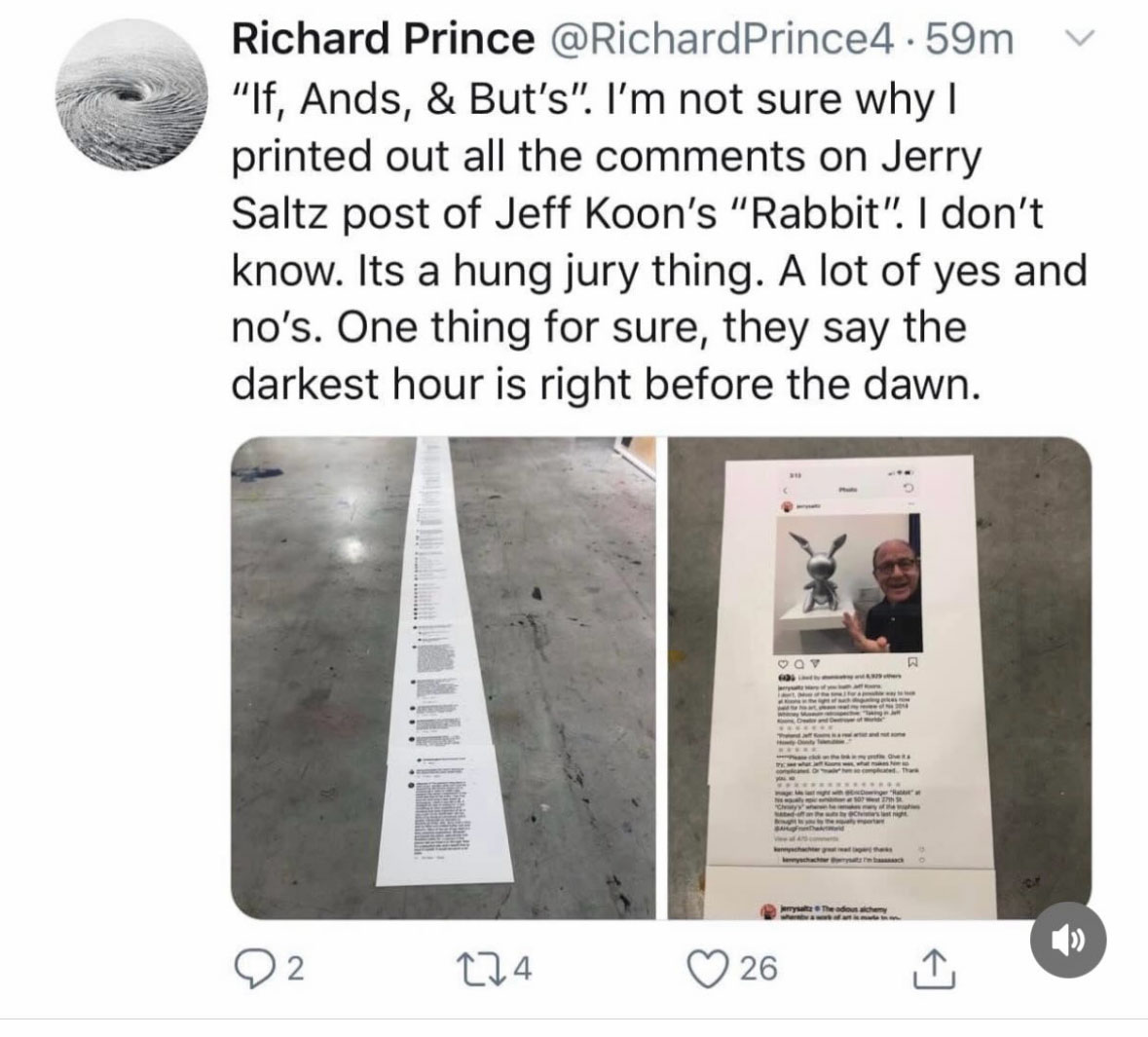
Later, when Richard Prince made a printed scroll out of comments on Jerry Saltz’s Instagram, it crystalized the importance for me. Prince still had to appropriate the celebrity and audience of someone else. ONA had already collapsed those roles into one figure. In that sense, The Scroll is proof that the project succeeded on its own terms: I had created a celebrity large enough that her numbers, comments, and reception could themselves become artistic material.